Understanding the importance of outdoor play
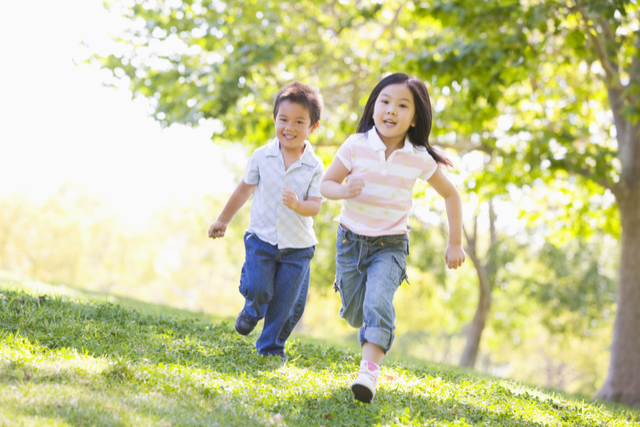
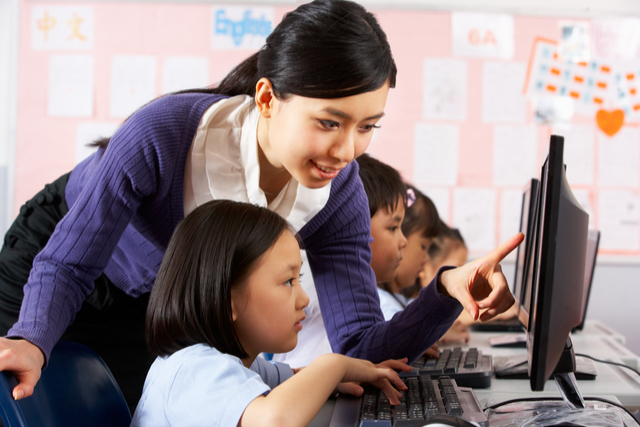
The lives of children today are vastly different from the past. Children today have few opportunities to play with the grass, trees and flowers outside. They don’t learn about nature through nature itself, but through computer screens.
Children’s interaction with the natural world has reduced due to a number of factors. In 2004, Clements found that 82% of mothers with children aged 3 to 12 felt that the fear of crime and safety prevented them from allowing their children to play outdoors. Due to ‘stranger danger’, many children are also forbidden from playing outside freely unless with adult supervision. Furthermore, parents want their children to begin acquiring various knowledge and skills from a young age. And so children’s days are now planned from the start till the end with sports classes, enrichment classes and tuition classes, leaving them little to no time for outdoor play. Hence, interaction with nature is now a vanishing experience of childhood.
However, outdoor play is important for the healthy development of a child. The specific traits and features of an outdoor play experience cannot be replicated by indoor play (Stephenson, 2002). Outdoors is defined by Maynard and Waters to be an open and constantly changing environment where one experiences freedom, gross and boisterous movements, and contact with natural elements.
Benefits of nature on child development:
-
Sparks curiosity and the desire to learn
By exploring Mother Nature, children are filled with wonder and curiosity about the world. Interaction with elements such as the caterpillar, water or soil can provide learning opportunities related to science, mathematics and language. With the help of an adult’s explanation, children can learn about the life cycle of a caterpillar through observing it’s transformation to a butterfly. They can learn about the concept of matter through water and land. Learning occurs in a fun, integrated and hands-on manner. Outdoor education cultivates education as part of life, rather than separate from it (Gardner, 1991).
-
Creativity and problem-solving skills
In the natural environment, natural elements such as sticks, stones, water and insects capture the attention and interest of young children. They are explored with curiosity and they also offer various opportunities to play. Unlike man-made toys where instructions are given on how to play, nature does not define what we should and should not do with a stick or a stone.
This allows children to use their imagination to design their own form of ‘play’. The child could draw on the sand with a stick, or pile up many sticks to form a stick castle. Indeed, the possibilities are endless.
In this process of inventing and re-inventing play for different objects, children develop creativity and problem solving skills.
-
Improves physical health
Spending more time outdoors lead to lower rates of near-sightedness, also known as myopia, in children and in adolescents (American Academy of Ophthalmology, 2011).
Contact with our natural environment also reduces stress. A 2010 study published in Environmental Health and Preventive Medicine found that participants who walked in a forest had lower levels of cortisol (a hormone released when the body experiences stress), lower heart rate and lower blood pressure as compared to those who had walked in a city environment.
Children who regularly engage in outdoor play have more advanced motor skills such as coordination, agility and balance. They also fall sick less often (Fjortoft 2001, Grahn et al. 1997).
Research has also shown that contact with “harmless microbes” in nature provide protection against diseases (Haahtela, 2016).
-
Improves social relations
It has been shown that less conflicts occur during outdoor play and children tend to cooperate more with each other. Because the outdoor space is open and less predictable, children develop common goals and work together with each other. In this process, they develop important social skills such as understanding other people’s needs and having teamwork.
In the expanse of an outdoor area, children do not have to constantly bump into one another (unlike in closed rooms indoors), giving them the freedom to play in groups or individually.
-
Helps children develop a positive relationship with the environment
Attitudes that are formed during early childhood carry through to their adult lives. When children interact regularly with nature, they develop respect and care for the environment. They see themselves as part of the environment, and nature comes to be seen as something they should love and cherish rather than to be fearful of and controlled for.
-
Increased opportunities to challenge their limits
In outdoor play, situations such as climbing a tree or a big rock allow children to find ways to solve a problem or to achieve a goal. Though trial and error, children push themselves to keep trying. These “risky” activities are important for the development of a child’s independence, resilience and problem solving. When children are engaged in such activities, it is ideal for parents to support them with the necessary advice or guidance (for example, how to get on the rock) while still giving them some degree of autonomy.
Singapore has evolved to a modern, technological city-state, but that doesn’t mean that we should rob our children of experiences with nature. Nature is a part of our environment and it improves our quality of life. By connecting to nature regularly, children experience better health, greater social and cognitive skills, and develop a positive relationship with their environment. With this in mind, parents and educators should work to create a balance between indoor activities and opportunities to connect with nature.
What can parents do to promote safe and healthy outdoor play experiences?
-
Ensure that your child is prepared for different weather conditions
- Your child should always have a raincoat in case it rains
- Extra set of clothes to change into
- Water bottle to keep themselves hydrated
-
If your child has a medical condition, ensure that you bring along required medicine or supporting equipment.
- Remember to seek the doctor’s advice on outdoor activities that are suitable and not suitable for your child.
-
Educate your child on dangerous things/people to beware of
- Dangerous items such as glass shards or nails can hurt your child. Educate your child on what are the things that he/she should avoid.
- You should also conduct a routine check of the outdoor area beforehand to remove any dangerous objects.
- Remind your child not to follow anyone else besides his/her family member.
-
Teach your child to stay away from roads.
- Teach your child to seek help from an adult when a toy rolls onto the road.
-
Keep an eye on your child
- Stay close to your child and ensure that he is always in your line of vision. This is so that you can prevent him from doing anything that might be dangerous.
-
Ensure that your child wears a helmet when engaged in outdoor activities such as rollerblading, cycling or skateboarding.
Sources:
Bento, G., & Dias, G. (2017). The importance of outdoor play for young children's healthy development. Porto Biomedical Journal, 2(5), 157-160.
Clements, R. (2004). An Investigation of the Status of Outdoor Play. Contemporary Issues in Early Childhood, 5(1), 68-80.
Haahtela, T. (2017). Why medical community should take biodiversity loss seriously? Porto Biomedical Journal, 2(1), 4-5.
Gardner, H. (1991). The tensions between education and development. Journal of Moral Development, 20(2), 113-125
Grahn, P., Martensson, F., Llindblad, B., Nilsson, P., & Ekman, A., (1997). UTE pa DAGIS, Stad & Land nr. 93/1991 Sveriges lantbruksuniversitet, Alnarp
Maynard, T., & Waters, J. (2007). Learning in the outdoor environment: a missed opportunity? Early Years, 27(3), 255-265.
Stephenson, A. (2002). Opening up the outdoors: Exploring the relationship between the indoor and outdoor environments of a centre. European Early Childhood Education Research Journal, 10(1), 29-38.
It takes a village to raise a child !
Join our Facebook group Preschools & Kindergartens in Hong Kong to interact with other parents.