• My Home
  • Community
  • Facebook
  • babyment@babyment.com
Canvas Logo Canvas Logo
  • Home
  • Conceiving
    • Get Pregnant Fast
    • Nutrient For Fertility
    • IVF in Singapore
  • Pregnancy
    • Safe To Eat During Pregnancy?
    • Discomfort and Solution
    • Pregnancy Care
    • Buying Guide
    • Zika and Pregnancy
    • Birth Delivery
    • Baby Names
    • Chinese Baby Names
    • Nutrition During Pregnancy
    • Pregnancy Week By Week
  • 0-1 Year
    • Safe For Baby To Eat?
    • Breastfeeding
    • Baby Bonus
    • About Hiring Maid
    • Baby Food Recipes
    • Confinement Care
    • Daily Baby Care
  • 1-3 Year
    • HFMD
    • Children Daily Care
    • Early Education
  • Directories
    • Preschool Open House, School Tour
    • Gynaecologists
    • Pediatricians
    • Nursing Rooms
    • Kindergarten
    • Child Care Centres
    • Baby Clinics

Our Approach To Numeracy
  • Rajani Patel, PYP Coordinator, EtonHouse
  • EtonHouse

 Just as literacy is a form of communication, numeracy too is a way to represent and share information of the world around us. These are life skills and children need opportunities to use them and see them being used in real life situations which help them to make meaning of it. Worksheets and other formal teaching strategies make learning abstract and dry. This approach decontextualises learning and some children find it difficult to make connections with mathematical concepts in this way. Children can better internalise them when they are exposed to number concepts used around them as part of everyday experiences.

Just as literacy is a form of communication, numeracy too is a way to represent and share information of the world around us. These are life skills and children need opportunities to use them and see them being used in real life situations which help them to make meaning of it. Worksheets and other formal teaching strategies make learning abstract and dry. This approach decontextualises learning and some children find it difficult to make connections with mathematical concepts and understandings in this way. 

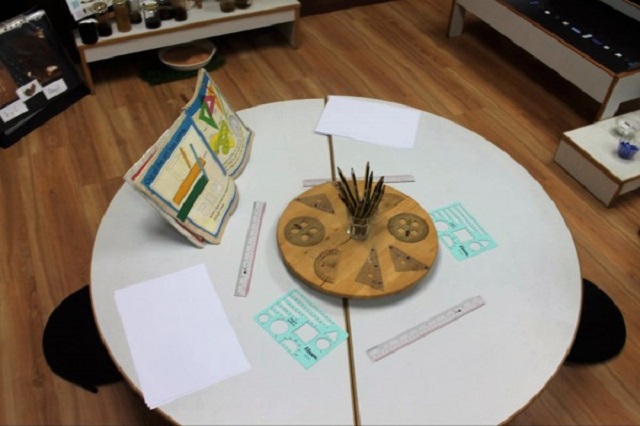
Numeracy is about more than counting. Recognising patterns, sorting and categorizing objects, talking about time and the patterns of the day, measuring and calculating amounts, arranging objects in space and identifying shapes, are all important aspects of mathematical thinking that contributes to numeracy. In our classrooms, teachers plan experiences and the environment, such that there are materials and resources that allow children to problem–solve and explore the world ‘mathematically’; key elements in the development of numeracy. Within our units of inquiry, teachers plan experiences and explorations that support children to explore the inquiry in an authentic manner.

There are also lots of opportunities for incidental learning, which means that learning is happening as a result of being in an environment rich in both language and mathematics without teachers giving direct directions or talking at the children. When the children gain exposure to number concepts used around them in meaningful ways, as part of everyday experiences, they begin to internalise them. They begin to recognize the numbers, the concepts that are being used by the teachers and other children.

In early childhood classrooms, when children play in the home corner using play money and the cash register, they begin to engage with counting, addition, subtraction and various math concepts.  When children engage in cooking experiences, read ‘a recipe’ and measure ingredients, they are working with the mathematical concepts of volume, quantity and measurement. These experiences provide children with opportunities to connect with numeracy at their own pace and use their ideas and thinking in contexts that mirror real life.  Teachers constantly facilitate these interactions within our classrooms and studio environments with the children by the deliberate use of mathematical language and ideas such as, “How many more do you need?” “How long is it?”, “It is half as long as the other one?”, or “How many cups of water do you need?”

By providing the resources that encourage such play and constantly thinking of mathematical learning within our inquiries, as well as drawing children’s attention to what they are learning when they are engaged in the experiences, our teachers play a very valuable role by scaffolding the development of children’s mathematical thinking and learning.

Source: Our Approach To Numeracy

It takes a village to raise a child !

Join our Facebook group Preschools & Kindergartens in Hong Kong to interact with other parents.

 Computer literacy is therefore an essential skill that children need in order to maneuver through a society that is abound with technology.

Computer Skills for Young Children

Computer Skills for Young Children:Computer literacy is therefore an essential skill that children need in order to maneuver through a society that is abound with technology.
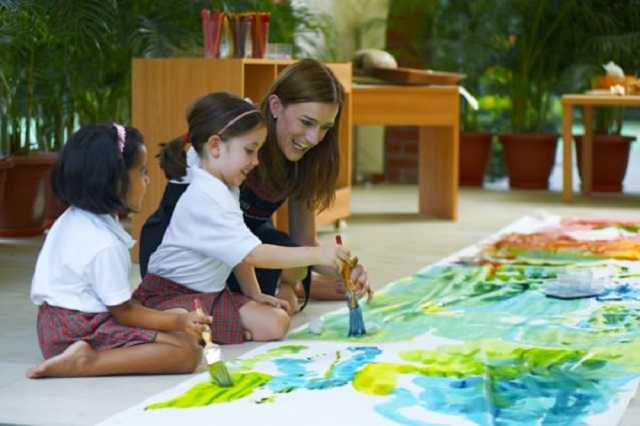
 Children enjoy the physical sensation of paint dragging across the canvas or squishing clay with their fingers. Are these activities valuable, even if they do not turn into a polished ‘finished’ product? Parents and teachers might find only a ‘finished’ product the proof of ‘successful’ learning. Considering a young child from a developmental perspective, might we expect too much ‘product’ too soon and simultaneously expect too little ‘process’ at all ages? Exactly how does a caring parent or teacher foster creativity and experimentation within a child?

Fostering Creativity: Valuing Process Over Product

Children enjoy the physical sensation of paint dragging across the canvas or squishing clay with their fingers. Are these activities valuable, even if they do not turn into a polished ‘finished’ product? Parents and teachers might find only a ‘finished’ product the proof of ‘successful’ learning. Considering a young child from a developmental perspective, might we expect too much ‘product’ too soon and simultaneously expect too little ‘process’ at all ages? Exactly how does a caring parent or teacher foster creativity and experimentation within a child?
  • Popular
  • Recent
Tantrums in Children

Tantrums in Children

  • 35 Comments
Period or pregnancy symptoms

Period or Pregnancy Symptoms

  • 24 Comments
Breastfeeding Positions

Breastfeeding Positions

  • 19 Comments
Pregnancy Nutrition

Pregnancy Nutrition

  • 10th Jan 2017
Harmful effect of sugar on baby

Why no sugar for baby

  • 16th Jan 2017
Inducing Labour

Inducing Labour

  • 18th Jan 2017

Our mission is to help parents and parents-to-be to save time and moneyin pregnancy and parenting journey.

Headquarters:
#06-15 Nordcom 1
3 Gambas Cres, Singapore 757088
Email:hk@babyment.com

Babyment®

  • About Us
  • Contact Us

Popular Articles

How to increase breast milk supply

  • 10th July 2014

Early Symptoms of Autism in Children

  • 10th July 2014
Like us
on Facebook
Copyrights © 2019 All Rights Reserved by Babyment®
Terms of Use / Privacy Policy
hk@babyment.com · ·