• My Home
  • Community
  • Facebook
  • babyment@babyment.com
Canvas Logo Canvas Logo
  • Home
  • Conceiving
    • Get Pregnant Fast
    • Nutrient For Fertility
    • IVF in Singapore
  • Pregnancy
    • Safe To Eat During Pregnancy?
    • Discomfort and Solution
    • Pregnancy Care
    • Buying Guide
    • Zika and Pregnancy
    • Birth Delivery
    • Baby Names
    • Chinese Baby Names
    • Nutrition During Pregnancy
    • Pregnancy Week By Week
  • 0-1 Year
    • Safe For Baby To Eat?
    • Breastfeeding
    • Baby Bonus
    • About Hiring Maid
    • Baby Food Recipes
    • Confinement Care
    • Daily Baby Care
  • 1-3 Year
    • HFMD
    • Children Daily Care
    • Early Education
  • Directories
    • Preschool Open House, School Tour
    • Gynaecologists
    • Pediatricians
    • Nursing Rooms
    • Kindergarten
    • Child Care Centres
    • Baby Clinics

5 Tips On Designing Learning Spaces At Home
  • Ng Shu Ping, Director of Pedagogy, E-Bridge Pre-School (Contact: 6746 3333)
  • EtonHouse

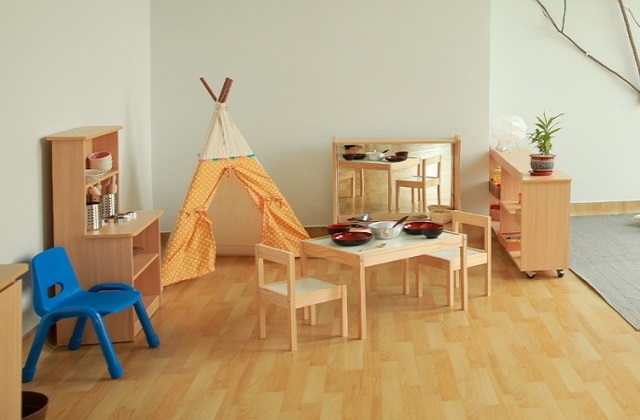
 Designing Learning Spaces At Home: how to design the learning space at home to maximize the learning potential of each child.

This notion of the use of the environment to extend and challenge children’s learning and thinking was brought into awareness by the schools and educators of Reggio Emilia. Other educators such as Maria Montessori emphasized on an environment that nurtures children’s independence through child-sized furniture and thoughtful placement of materials at the child’s level, readily accessed when needed to. Rudolf Steiner called for the importance of open-ended play with resources chosen because they can be used in many ways. All of these values have helped shaped many of the classrooms in early childhood environments.

Taking the values from above, how then can you create innovative learning spaces for your child at home?

1. Declutter.

It is great for children to have choices but overwhelming when children have too many. Create a storage system with clear plastic containers. Label the containers and sort all the different resources you have. It may be an intensive one-off exercise but definitely worth the effort in the long haul.

2. Listen to and observe your children.

Find out what their interests are. What are they curious to find out about? Then create learning spaces that are responsive to these interests and curiosities. Be prepared to make changes to learning spaces that are not working out as planned. 

3. Be intentional.

Every learning space and every resource should serve a purpose. Ask yourself, “What is the purpose … (of this or that)?” Our respect for spaces and materials serves as a role model for children. Similarly, clutter communicates the lack thereof. Support the children as they help to clean up the space after use. It is important for children to know where things go. Children have a right to be in spaces that are aesthetically pleasing.  

Collect beautiful and diverse art pieces, pretend play props and other learning resources and create spaces where children can interact with them. Remember to label all spaces and outline and print the rules or agreements on the use of the different spaces and resources. Not only will the environmental print enhance reading competence in your children, it will also reinforce social skills when siblings and peers are involved.

4. Use open-ended resources.

Let your child's creativity and imagination fuel the play. Be inventive with recycled materials. In Reggio Emilia, the placement of resources in a thoughtful way is called a provocation. It is called so because it provokes wonder, imagination, amazement and curiosity in the child. It provokes the child to want to learn and find out more.

5. Make spaces magical.

Add a mirror where children construct with blocks to allow themselves to view from multiple perspectives. Create a hanging drape with fabric to partition a cosy nook. Throw in a string of fairy lights to illuminate the space.

When a learning space is lovingly and meaningfully set up, children can certainly be engaged in purposeful play for long periods of time.


Source: 5 Tips on Designing Learning Space at Home

It takes a village to raise a child !

Join our Facebook group Preschools & Kindergartens in Hong Kong to interact with other parents.

 Computer literacy is therefore an essential skill that children need in order to maneuver through a society that is abound with technology.

Computer Skills for Young Children

Computer Skills for Young Children:Computer literacy is therefore an essential skill that children need in order to maneuver through a society that is abound with technology.
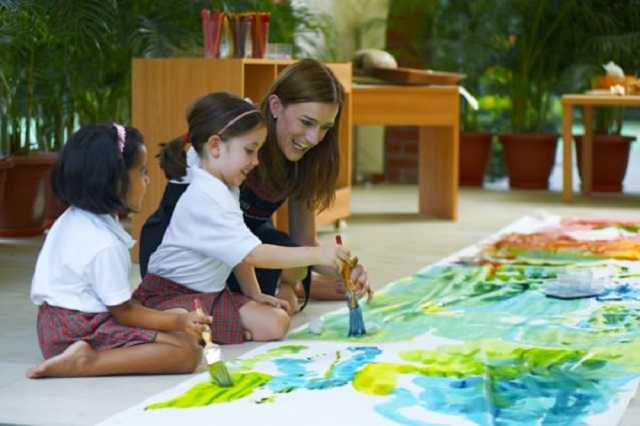
 Children enjoy the physical sensation of paint dragging across the canvas or squishing clay with their fingers. Are these activities valuable, even if they do not turn into a polished ‘finished’ product? Parents and teachers might find only a ‘finished’ product the proof of ‘successful’ learning. Considering a young child from a developmental perspective, might we expect too much ‘product’ too soon and simultaneously expect too little ‘process’ at all ages? Exactly how does a caring parent or teacher foster creativity and experimentation within a child?

Fostering Creativity: Valuing Process Over Product

Children enjoy the physical sensation of paint dragging across the canvas or squishing clay with their fingers. Are these activities valuable, even if they do not turn into a polished ‘finished’ product? Parents and teachers might find only a ‘finished’ product the proof of ‘successful’ learning. Considering a young child from a developmental perspective, might we expect too much ‘product’ too soon and simultaneously expect too little ‘process’ at all ages? Exactly how does a caring parent or teacher foster creativity and experimentation within a child?
  • Popular
  • Recent
Tantrums in Children

Tantrums in Children

  • 35 Comments
Period or pregnancy symptoms

Period or Pregnancy Symptoms

  • 24 Comments
Breastfeeding Positions

Breastfeeding Positions

  • 19 Comments
Pregnancy Nutrition

Pregnancy Nutrition

  • 10th Jan 2017
Harmful effect of sugar on baby

Why no sugar for baby

  • 16th Jan 2017
Inducing Labour

Inducing Labour

  • 18th Jan 2017

Our mission is to help parents and parents-to-be to save time and moneyin pregnancy and parenting journey.

Headquarters:
#06-15 Nordcom 1
3 Gambas Cres, Singapore 757088
Email:hk@babyment.com

Babyment®

  • About Us
  • Contact Us

Popular Articles

How to increase breast milk supply

  • 10th July 2014

Early Symptoms of Autism in Children

  • 10th July 2014
Like us
on Facebook
Copyrights © 2019 All Rights Reserved by Babyment®
Terms of Use / Privacy Policy
hk@babyment.com · ·