Exercise in Pregnancy: What the Research Says About Safety and Benefits
For many expectant mothers, the question isn't just whether they should exercise — it's how, when, and how much. Gone are the days when pregnancy was treated as a time for complete rest. Today, research overwhelmingly supports exercise during pregnancy as safe and beneficial for most women. In fact, medical bodies like the American College of Obstetricians and Gynecologists (ACOG) have clear guidelines promoting regular physical activity throughout pregnancy.
Is It Safe to Exercise During Pregnancy?
Yes — for most pregnant women without complications, moderate exercise is not only safe, but recommended. ACOG and the World Health Organization both advise that healthy pregnant women aim for at least 150 minutes of moderate-intensity aerobic activity per week.
According to a 2020 review published in the British Journal of Sports Medicine, physical activity during pregnancy is linked to reduced risks of:
- Gestational diabetes
- Preeclampsia
- Excessive weight gain
- Cesarean birth
- Postpartum depression
Recommended Types of Exercise
1. Aerobic/Cardiovascular Exercise
Examples include brisk walking, swimming, cycling on a stationary bike, or low-impact aerobics. These activities improve heart and lung function without putting too much strain on the body. ACOG recommends moderate-intensity aerobic workouts that raise your heart rate but still allow you to carry on a conversation.
2. Strength Training
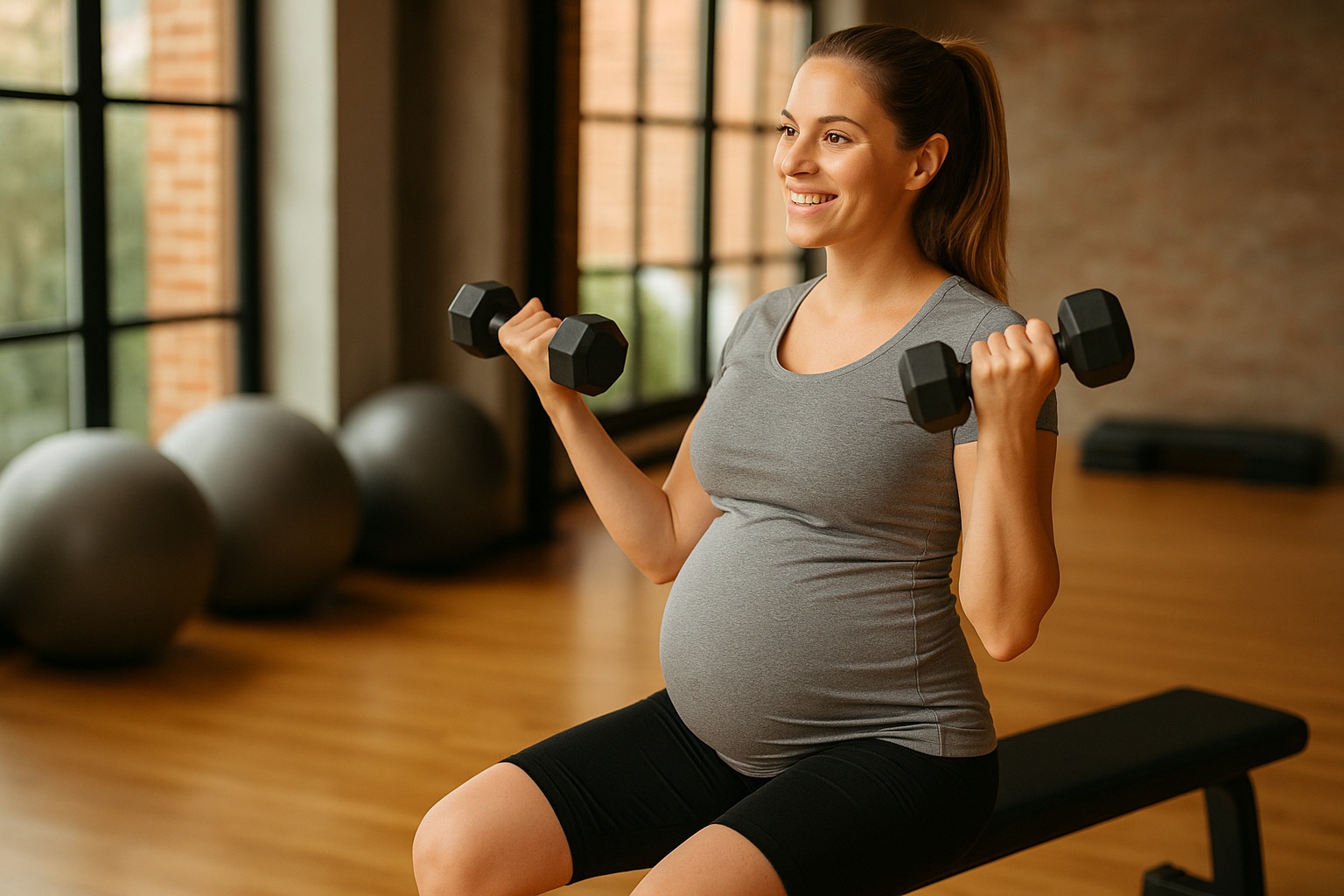
Maintaining muscle tone is helpful for labor and postpartum recovery. Light to moderate resistance training (e.g., using body weight, resistance bands, or light weights) is considered safe if done with proper form and supervision.
3. Flexibility and Balance
Yoga and stretching exercises help with posture, reduce back pain, and improve flexibility. Choose prenatal yoga or modified routines to avoid positions that require lying flat on your back after the first trimester.
What to Avoid
- High-contact sports or activities with a risk of falling (e.g., skiing, horseback riding)
- Scuba diving or hot yoga (risk of overheating or pressure changes)
- Exercises lying flat on your back after 20 weeks of pregnancy
- Overexertion, breath-holding, or pushing through pain
When to Stop and Consult a Doctor
Stop exercising and speak to your healthcare provider if you experience:
- Vaginal bleeding
- Shortness of breath before starting exercise
- Dizziness, headache, or chest pain
- Swelling or calf pain
- Preterm labor symptoms
Certain conditions such as placenta previa, severe anemia, or preeclampsia may require modifications or avoidance of physical activity. Always consult your obstetrician before starting or continuing a fitness program during pregnancy.
Benefits for Baby
Exercise isn’t just good for mom — studies show that regular prenatal exercise may contribute to:
- Healthier birth weights
- Improved fetal heart rate variability (a sign of better autonomic function)
- Lower risk of metabolic diseases in childhood
Conclusion
Staying active during pregnancy offers powerful health benefits for both mother and baby. By following research-backed guidelines and listening to your body, you can enjoy a safer, healthier pregnancy. Whether it’s a daily walk, gentle strength training, or prenatal yoga, every bit of movement counts — and contributes to your physical and emotional well-being.
FAQ
Is it safe to start exercising if I wasn't active before pregnancy?
Yes, you can begin with low-impact activities such as walking or swimming. Start gradually and increase intensity as tolerated. Consult your doctor before beginning any new routine.
Can I continue high-intensity workouts during pregnancy?
If you were highly active before pregnancy, you may be able to continue with modifications. Always monitor your heart rate, hydration, and body temperature — and seek medical clearance.
How do I know I’m not overexerting?
Use the “talk test”: if you can speak but not sing during exercise, you’re likely in the moderate zone. Stop immediately if you feel dizzy, faint, or breathless.
Can exercise help with labor?
Yes — evidence shows that fit mothers often experience shorter labor durations, reduced need for interventions, and faster recovery.
Scientific and Professional Sources
- American College of Obstetricians and Gynecologists (ACOG). Physical Activity and Exercise During Pregnancy and the Postpartum Period. 2020.
- Barakat, R. et al. (2019). Exercise during pregnancy: A clinical update. Current Opinion in Obstetrics and Gynecology.
- UK Chief Medical Officers’ Guidelines (2019). Physical Activity Guidelines for Pregnant Women.
- Davenport MH et al. (2018). Impact of physical activity during pregnancy on maternal and fetal outcomes. British Journal of Sports Medicine.
It takes a village to raise a child !
Join our Facebook group Preschools & Kindergartens in Hong Kong to interact with other parents.