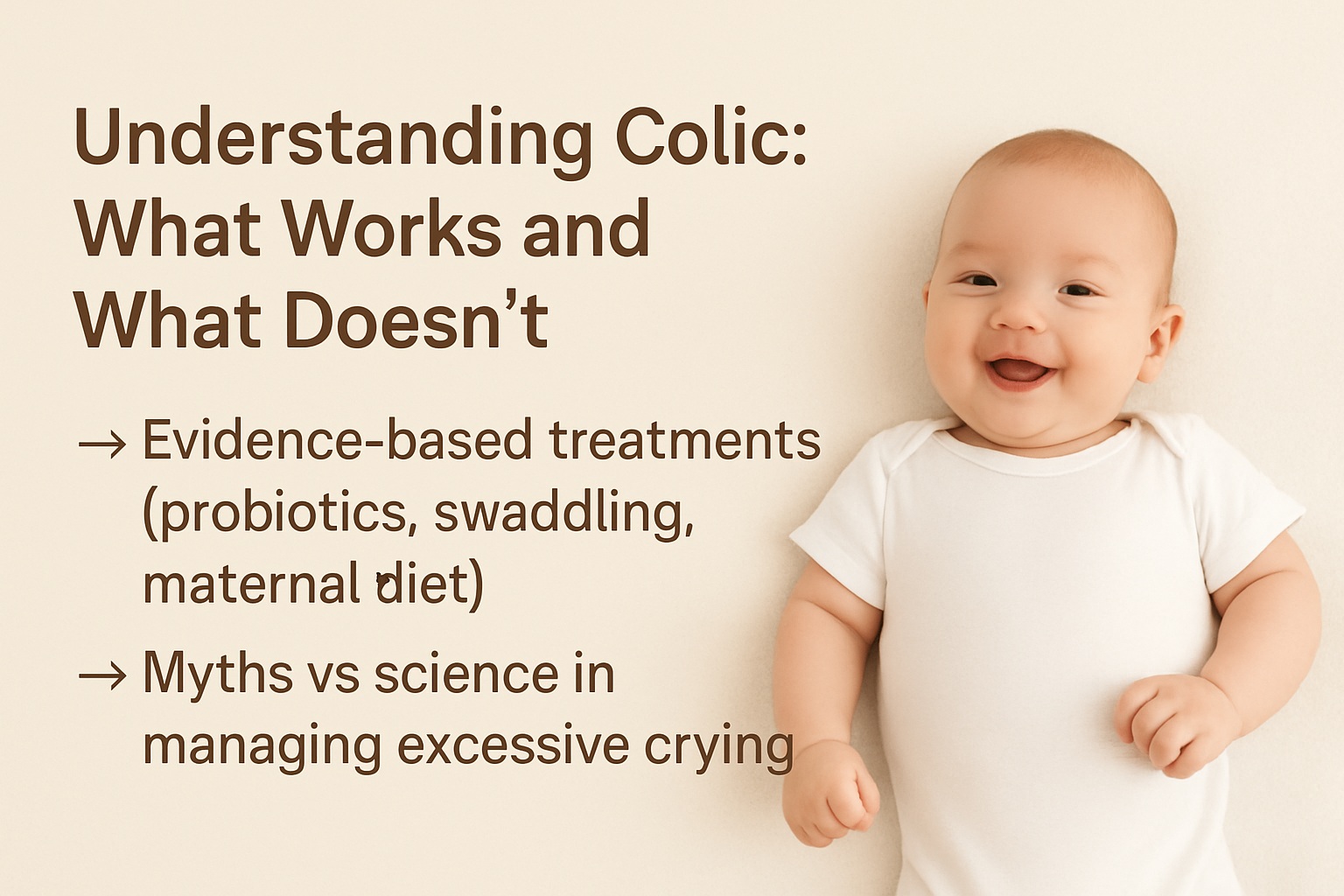
Understanding Colic: What Works and What Does Not
Colic is one of the most frustrating experiences for new parents. Characterized by intense, unexplained crying in an otherwise healthy baby, colic typically appears around 2 weeks of age and peaks at 6 to 8 weeks. While the crying often resolves by 3 to 4 months, understanding what truly helps—and what doesn’t—can ease the emotional burden on families.
What is Colic?
Colic is defined by the "Rule of Threes": crying for more than 3 hours per day, more than 3 days per week, for more than 3 weeks in an otherwise healthy infant. The cause of colic remains unclear, but theories include gastrointestinal discomfort, immature digestion, and neurological overstimulation.
Evidence-Based Treatments That May Help
- Probiotics: Some studies suggest Lactobacillus reuteri may reduce crying time in breastfed infants. However, results are mixed for formula-fed babies.
- Swaddling and Motion: Swaddling combined with rhythmic rocking or white noise may soothe colicky infants by mimicking the womb environment.
- Maternal Diet (for Breastfed Infants): Removing potential irritants like cow’s milk protein from the mother’s diet has shown benefit in some cases.
- Soothing Techniques: “The 5 S’s” (Swaddle, Side/stomach position, Shush, Swing, Suck) introduced by Dr. Harvey Karp can help calm babies.
What Doesn’t Work (According to Science)
- Gripe Water: Widely used but lacks scientific evidence. Some formulations contain alcohol or sugar, which can be harmful.
- Homeopathy: No credible scientific support for homeopathic remedies in treating colic.
- Switching Formulas Frequently: Unless advised by a pediatrician, changing formulas without medical indication can do more harm than good.
When to Seek Help
While colic is not dangerous, it can lead to parental stress and in rare cases, shaken baby syndrome. If you’re feeling overwhelmed, seek help from your pediatrician or a support network. It’s also important to rule out other conditions like reflux, infections, or allergies.
Conclusion
Colic is exhausting, but temporary. Evidence-based treatments like probiotics, swaddling, and maternal dietary changes offer some relief. Knowing what works—and avoiding myths—can make this tough stage a little more manageable.
FAQ
- Q: Is colic a sign of illness?
- A: No. Colic occurs in otherwise healthy babies. However, it's important to consult a doctor to rule out other causes of excessive crying.
- Q: Can formula cause colic?
- A: Not directly, but some infants may be sensitive to cow’s milk protein. Talk to your pediatrician before switching formulas.
- Q: Will my baby outgrow colic?
- A: Yes. Most colicky babies improve by 3 to 4 months of age.
- Q: Do probiotics work for colic?
- A: Research shows Lactobacillus reuteri may help breastfed babies, but the benefits are less clear for formula-fed infants.
Scientific and Professional Sources
- American Academy of Pediatrics. “Colic Relief: A Guide for Parents.” HealthyChildren.org. Link
- Indrio, F., et al. (2014). “Prophylactic use of a probiotic in the prevention of colic.” JAMA Pediatrics, 168(3), 228–233. Link
- Harvard Health Publishing. “Colic: What works and what doesn’t.” Link
- Vandenplas, Y., et al. (2015). “Guidelines for the diagnosis and management of cow’s milk protein allergy in infants.” Archives of Disease in Childhood, 100(2), 134–138.
It takes a village to raise a child !
Join our Facebook group Preschools & Kindergartens in Hong Kong to interact with other parents.