Teething Myths vs Real Discomfort Relief: What Actually Helps Babies
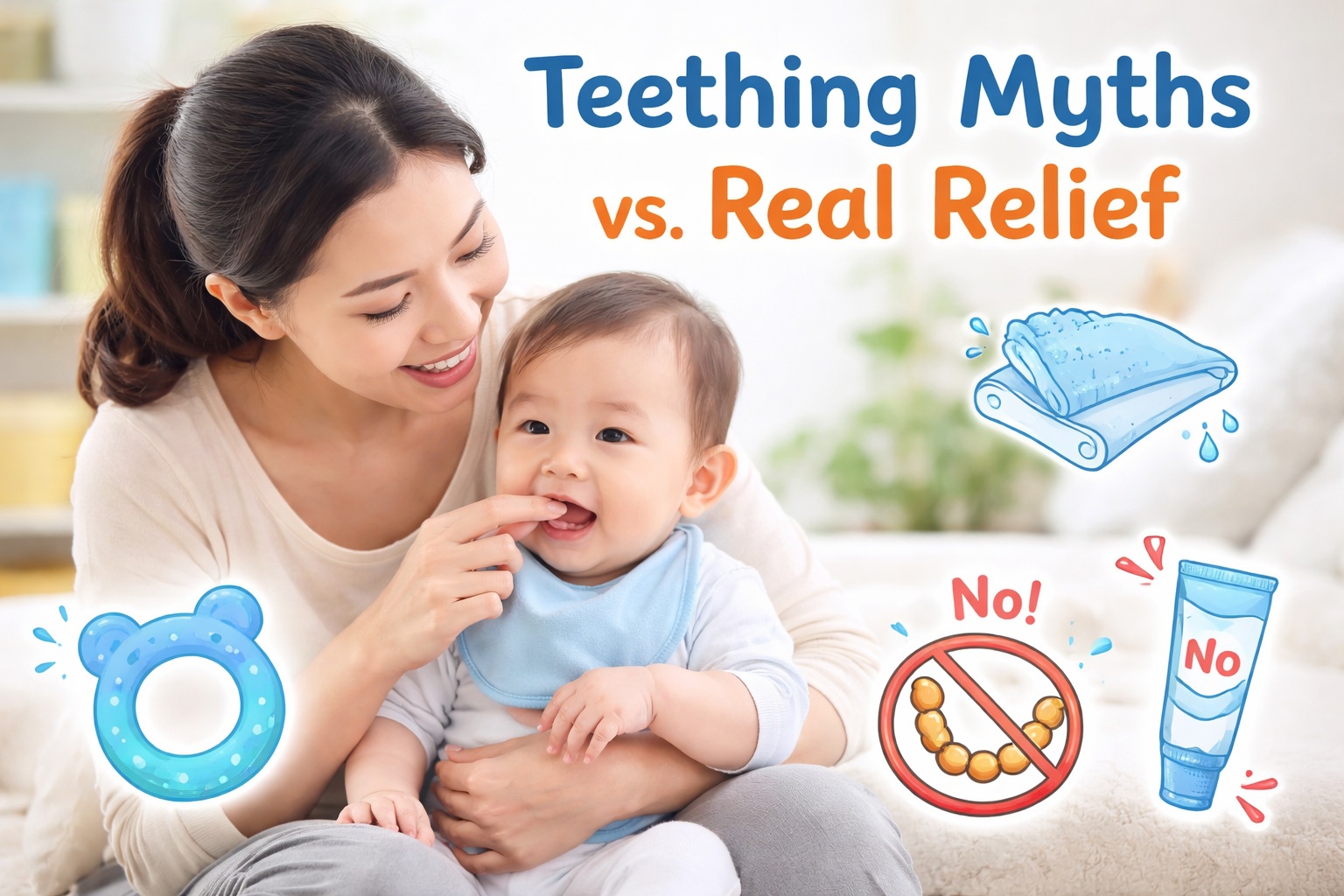
Teething Myths vs Real Discomfort Relief: What Actually Helps Babies
For parents: If your baby is drooling, chewing everything, and suddenly fussier than usual, teething may be part of the story. But many parents are also told things that are not fully true — such as “every fever is from teething” or “amber necklaces naturally reduce pain.” This article breaks down common teething myths and explains what evidence-based relief really looks like.
What teething usually looks like
Teething often begins around the first year of life’s early months, though the exact timing varies from child to child. Common signs include:
- Drooling more than usual
- Wanting to chew on fingers, toys, or cloth
- Mild gum irritation or tenderness
- Fussiness or disrupted sleep
- Temporary changes in feeding mood
These symptoms can be uncomfortable, but they are usually manageable with simple, low-risk soothing measures.
Common teething myths — and what parents should know
Myth 1: Teething causes high fever
Reality: Teething may come with mild irritability and local gum discomfort, but a real fever should not automatically be blamed on teething. If your child has a noticeable fever, seems lethargic, or is not drinking well, it is better to think about infection or illness and get medical advice.
Myth 2: Teething causes diarrhea
Reality: Many babies start teething during the same months they also put more things into their mouths and catch more viruses. That timing can make teething look guilty when it may not be the real cause. Persistent loose stools, vomiting, or dehydration need proper attention.
Myth 3: Teething gels are the fastest and best solution
Reality: Not all gels are safe. Some numbing products can be risky for babies, especially products containing certain local anesthetics. Quick relief is not worth unsafe ingredients.
Myth 4: Amber teething necklaces are natural, so they must be safe
Reality: “Natural” does not always mean safe. Amber necklaces are not recommended because they can create choking and strangulation hazards, and there is no strong evidence that they relieve teething pain.
Myth 5: Rubbing alcohol or other traditional remedies on the gums helps
Reality: Alcohol should never be used on a baby’s gums. Folk remedies may sound harmless, but some are unsafe or simply do not work.
What actually helps teething discomfort
1. Gentle gum massage
Wash your hands, then gently rub your baby’s gums with a clean finger. The pressure itself can be soothing.
2. Chilled teething ring
A cool teething ring can help calm sore gums. It should be chilled, not frozen, because extreme cold can irritate delicate tissue.
3. Cool clean washcloth
A clean washcloth that has been cooled can be offered for chewing if your baby is old enough and supervised closely.
4. Extra comfort and routine support
Some babies simply need more cuddling, rest, and reassurance during teething phases. Keeping routines predictable may help reduce stress.
5. Age-appropriate pain relief when needed
If discomfort is clearly affecting sleep or feeding, parents can speak to a doctor or pharmacist about whether an age-appropriate pain reliever is suitable. Always use the correct dose and follow professional advice.
What to avoid
- Amber teething necklaces or bracelets
- Teething gels containing unsafe numbing ingredients unless specifically advised by a doctor
- Homeopathic teething tablets or gels with unclear safety profiles
- Alcohol, spirits, or herbal rubs on the gums
- Hard frozen objects that may injure the gums
When to see a doctor
Contact a healthcare professional if your baby has:
- A clear fever
- Diarrhea, vomiting, or signs of dehydration
- Severe irritability that does not settle
- Poor feeding or fewer wet diapers
- Symptoms that seem more like illness than teething
Teething discomfort is common. A sick-looking baby should not be assumed to be “just teething.”
The bottom line
Teething is real, but so are teething myths. Babies can absolutely feel gum discomfort, become fussy, drool more, and want to chew. But parents should be careful not to blame bigger symptoms — like fever, diarrhea, or significant illness — on teething alone. The safest approach is simple: cool objects, clean fingers, comfort, and caution with products marketed as “teething remedies.”
When in doubt, choose low-risk soothing methods and check with a qualified healthcare professional if symptoms go beyond mild gum discomfort.
FAQ
Does teething cause fever?
Teething may cause mild discomfort, but a real fever should be assessed properly and not automatically blamed on teething.
Does teething cause diarrhea?
No, diarrhea should not be assumed to be caused by teething. Look out for illness, infection, or dehydration.
What is the safest teething relief?
Gentle gum massage, a chilled teething ring, and a cool clean washcloth are among the safest common options.
Are teething necklaces safe?
No. They can create choking and strangulation risks and are not recommended.
Can I use teething gel?
Some teething gels are not recommended for babies because of safety concerns. It is best to ask a doctor or pharmacist before using any medicated product.
It takes a village to raise a child !
Join our Facebook group Preschools & Kindergartens in Hong Kong to interact with other parents.