Talking to Your Baby: Language Development from Birth
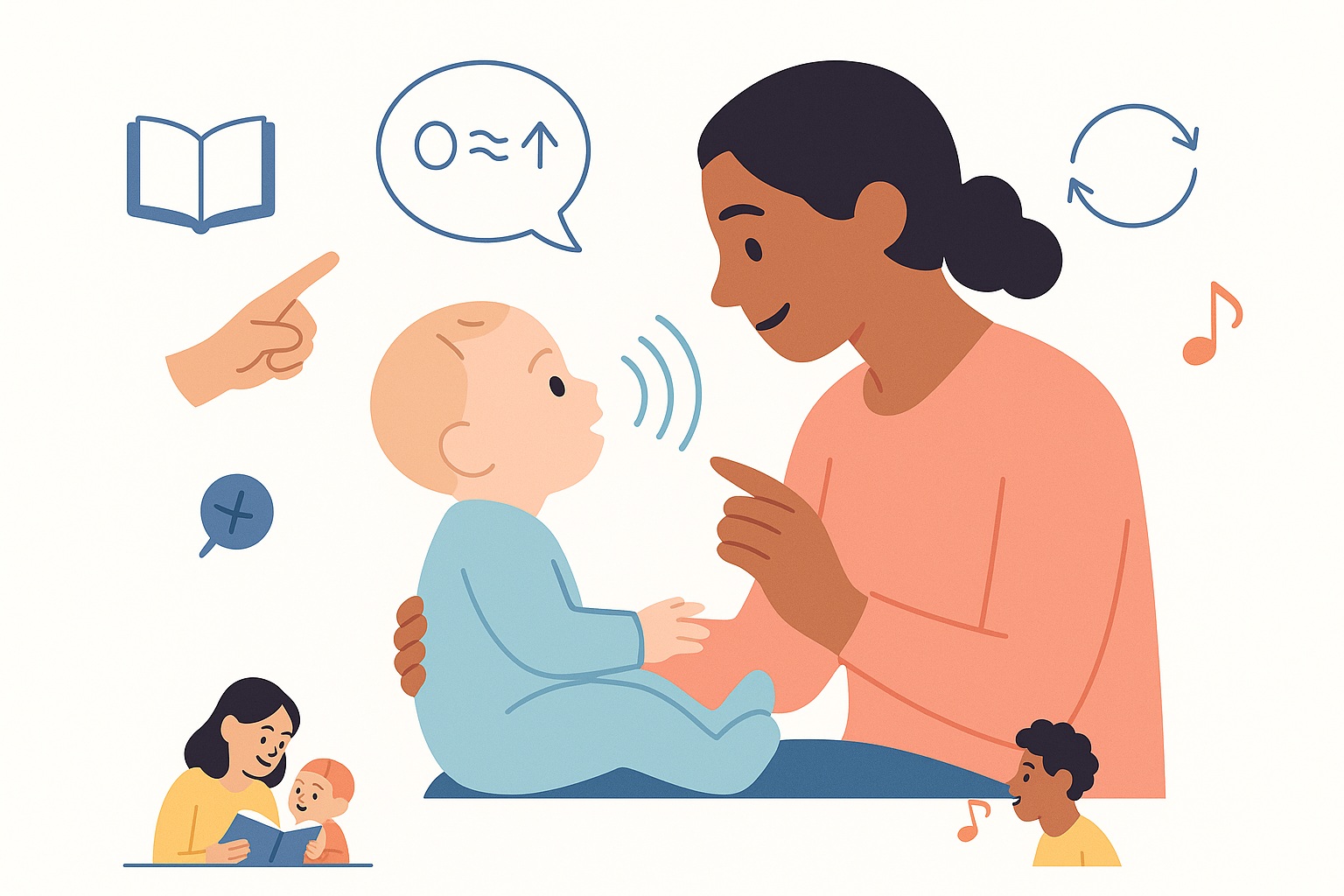
TL;DR: Start from day one. Hold your baby close, talk in warm, sing-song parentese, follow their lead, and read aloud daily. The most powerful ingredient is frequent, back-and-forth conversational turns—not the number of fancy words or apps.
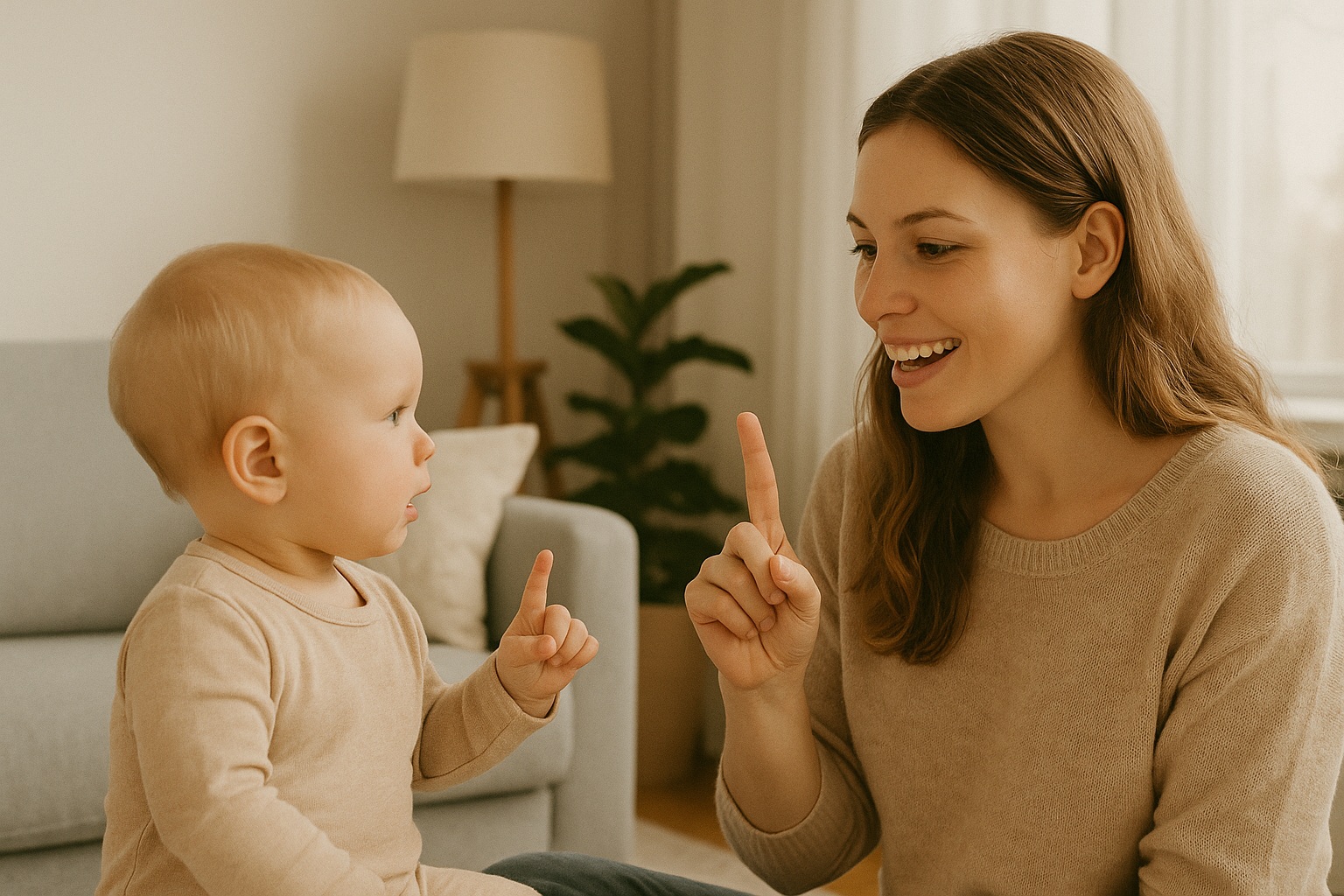
- Serve-and-return: Respond to your baby’s looks, sounds, and gestures with words and smiles—this two-way engagement builds language and brain connections.
- Read from birth: Reading aloud is an AAP-endorsed, evidence-based practice starting in infancy. Keep books everywhere and make it part of daily routines.
- Conversational turns & parentese: Coaching parents to use parentese increases adult-child turns and measurably advances babies’ language.
- Screen guidance: Avoid screens (except video chat) before 18 months; co-view if introduced after.
- Hearing matters: Babies in Singapore are screened at birth; follow up promptly if advised or if you notice concerns.
Why your voice matters from day one
Early language experience shapes the developing brain. Studies link frequent conversational turns—the back-and-forth exchanges between adult and child—to stronger language skills and measurable brain changes in language areas.
What to do at each stage (birth–24 months)
| Age | What babies are ready for | How to talk & play |
|---|---|---|
| 0–3 months | Looks at faces, startles to sound, coos | Hold close; narrate care routines; echo coos; use warm parentese; sing simple songs; soft books during feeds/after naps. (Avoid screens.) |
| 4–6 months | Babbling starts; follows your gaze | Name what they notice (“You see the light!”); imitate babbles and add a word; play serve-and-return games (peekaboo). |
| 7–12 months | Understands common words; points/gestures | Follow their point; label objects and actions; ask simple choices (“Milk or water?”) to invite turns; daily picture-book time. |
| 12–24 months | First words to word-combinations | Expand utterances (“Dog” to “Yes, a brown dog is running!”); describe feelings and routines; mix talk, songs, actions; keep screens minimal and co-view if used. |
Use your home languages freely—babies can learn more than one language without harm to development.
Pro tips that are strongly supported by research
- Make turns, not lectures. Pause after you speak to let your baby “answer”; mirror their sounds/gestures, then add a little more.
- Use parentese naturally. Higher pitch, slower tempo, exaggerated intonation—this style helps babies segment sounds and is linked to better language outcomes when sustained in daily life.
- Read early, read often. Board books, bath books, picture books—make it playful, not a test. Programs rooted in pediatrics recommend reading from infancy to build vocabulary and relationships.
- Responsive caregiving is the foundation. The WHO/UNICEF “Care for Child Development” approach—observe, respond, and play—is proven and used globally.
Singapore note: hearing screening & follow-up
All public hospitals in Singapore run universal newborn hearing screening (OAE/AABR). Babies who do not pass are referred promptly for audiology/ENT follow-up—ideally by 6 months—to protect language outcomes.
Red flags—talk to your doctor early
- No response to loud sounds or name by about9–12 months, or you’re worried about hearing at any age (seek audiology).
- Few babbles by 6–9 months or no words by 15–18 months—ask for developmental screening; use CDC milestone checklists as a guide.
- Loss of previously acquired skills—seek immediate evaluation.
FAQ
When should I start talking and reading?
From birth. Pediatric policy encourages literacy promotion in infancy, and daily serve-and-return talk supports healthy brain architecture.
Does bilingual exposure delay speech?
No. Using two (or more) languages with babies does not cause delays; early social communication milestones are shared across languages.
What is parentese—should I use it?
Yes—many caregivers naturally use it. Coaching families to use parentese increases conversational turns and improves infants’ language outcomes.
How much screen time for babies?
Avoid screens (except video chatting) before 18 months; for 18–24 months, choose high-quality content and co-view. Live, responsive interactions beat passive media.
What if my baby was born early?
Use corrected age when looking at milestones, and emphasise rich, responsive interactions and early hearing follow-up if needed. (Singapore runs universal hearing screening and early referrals.)
Key sources: AAP literacy promotion policy & technical report; WHO/UNICEF Care for Child Development; CDC Milestones; ROMEO et al. (MIT/Harvard) on conversational turns and brain; Ramírez, Lytle & Kuhl (PNAS 2020) on parentese coaching; AAP media policy; Singapore UNHS resources. See in-text citations for links.
Disclaimer: This article is educational and not a substitute for medical advice. If concerned about your child’s hearing, development, or communication, consult your pediatrician/GP or a speech-language therapist.
It takes a village to raise a child !
Join our Facebook group Preschools & Kindergartens in Hong Kong to interact with other parents.