Sore nipples: causes, treatment and prevention

Differentiate from temporary pain
Sore nipples are so common that many new nursing mothers think that it is normal to experience pain during breastfeeding. But experts in the field think otherwise.
It is true that nursing mothers may experience temporary pain during breastfeeding in the first week after birth when the baby first latches on. This temporary pain lasts about 10 seconds to 30 seconds as the aerola is being stretched and pulled into baby’s mouth. After 30 to 60 seconds into the breastfeeding, this pain should ease.
This temporary pain should disappear after one week in general.
Causes of sore nipples
Researches have shown that the most important cause of nipple soreness is improper positioning of the baby on the breast which causes the baby not take the nipple deep enough into his mouth. In breastfeeding, this is called the shallow latch. When it happens, the baby ends up sucking on the nipple rather than the breast. This causes first pain and then damages to the nipple.
For breastfeeding to be comfortable, the baby needs to have the entire nipple and part of the breast in his mouth, so that the nipple is near the back of his mouth.
Other causes of nipple pain include:
(a) Infection in the milk duct called mastitis.
(b) Breast engorgement.
(c) Unusual infant anatomy such as tongue-tie or lip-tie.
(d) Strong suckling.
(e) Unusual nipple anatomy such as inverted or flat nipples.
(f) Teething. If your baby has tender gums due to teething, she may change the way she moves her tongue. If she is not able take in a big mouthful of breast, she may end up biting your nipple.
(g) Soreness from your bra or breast pads. If your nursing bra is too tight, it will put pressure on your nipples.
(h) Some breast pads and plastic linings in bras do not let your skin breathe, and trap too much moisture, which may exacerbate the problem.
Treatment of sore nipples
In most cases, nipple pain can be solved by adjusting the positioning of your baby during breastfeeding.
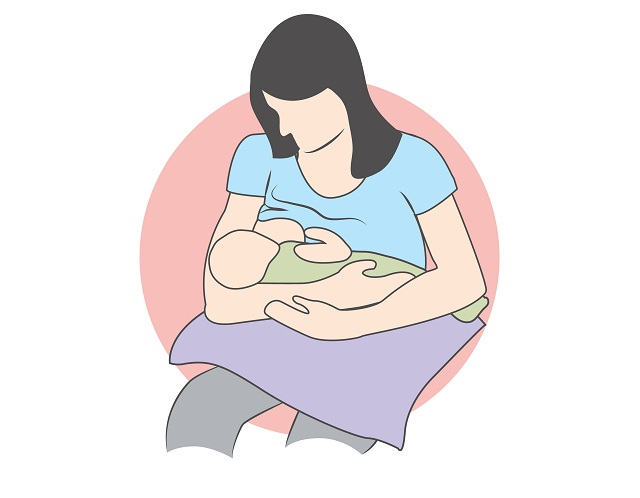
A good position occurs when the baby is able to take the nipple deeply enough into his mouth. He is able to have the entire nipple and part of the breast in his mouth, so that the nipple is near the back of his mouth. A proper latch also means that the baby latches on with his head tipped back and his chin is pressed into the mother’s breast with his nose away from the breast.
If you sit up during breastfeeding, make sure your baby is tucked close to you. Your supporting hand or arm should be placed behind his shoulders so that he can tip his head back and bring the chin into the breast first. You should direct your nipple towards his throat, so that as he opens his mouth wide and tips his head back, the breast will be in the perfect place to slide deeply into his mouth. Nipple pain may develop if the nipples enters the baby's mouth in an upwards manner.
If necessary, you should call an experienced mother or a lactation consultant to help you position your baby.
If a proper latch on does not solve the problem, you may need to suspect other problems that cause the nipple pain.
Call doctor in the following cases:
- Shooting or burning breast pain either during or after feedings
- Deep pain within your breast
- Strong pain in the breasts or nipples that doesn't get better after properly latching on and positioning your baby
- Nipples that are cracked, itchy, burning, or are pink, red, shiny, flaky, or have a rash with little blisters
Prevention of nipples pain
You can do the following to prevent nipple pain:
- If you feel your baby nipple-chewing, break the suction, remove your baby from your breast, and try attaching him again.
- If your baby is sucking his tongue, you may hear a smacking sound and see his cheeks caving in. Take your baby off your breast and reposition him.
- Ensure proper release by inserting a finger between your baby's jaws to break the suction before removing him from your breast.
- Allow your nipples to air dry after each feeding.
- Keep the nipple area free from Irritation by avoiding breast cream that is dry or contain alcohol.
- If you are using nursing pads, change them frequently. Consider using 100% cotton washable bra pads. Avoid pads with plastic or moisture-resistant liners.
- Wear clean, supportive 100% cotton nursing bras. Avoid underwires and tight bras.
- Watch for early hunger cues breastfeed him before he becomes too hungry. A hungry baby may not have patience and may grad at your nipple which can cause pain. He may also suck with stronger strength which can also cause soreness.
- Check for tongue-tie in baby. A baby with a tongue-tie isn’t able to lift his tongue or move it forward normally and this means he can’t use the tongue to help extract milk from the breast. Check if your baby sticks his tongue out past his bottom lip and if he lifts his tongue to the roof of his mouth when crying. If he seems unable to make these movements, consult with your doctor.
It takes a village to raise a child !
Join our Facebook group Preschools & Kindergartens in Hong Kong to interact with other parents.