Tantrum vs Meltdown (Neurodiversity Lens): How to Tell the Difference and Respond
Neurodiversity - Behaviour Support
Tantrum vs meltdown (neurodiversity lens): how to tell the difference and respond
Bottom line: Tantrums are usually goal-directed attempts to obtain/avoid something; they tend to ease when the goal is no longer rewarded. Meltdowns are an involuntary loss of control triggered by overwhelm (sensory, cognitive, emotional) and require safety and co-regulation, not consequences. Guidance here draws on the Child Mind Institute and leading autism organisations.
At a glance: key differences
Tantrum Often goal-directed
- Triggered by frustration or not getting a desired item/activity.
- Behaviour may pause if attention is removed or limits are consistent.
- Common in early childhood but should decrease with skills and consistent responses.
Meltdown Loss of control
- Triggered by overload (noise, light, crowding, transitions, unpredictability).
- Not responsive to bargaining or “giving in”; requires de-escalation and recovery time.
- Seen across ages in autistic people and others with sensory differences.
How to tell in the moment
- Ask “What function?” If the behaviour stops when the demand is met or attention stops, think tantrum. If it continues despite rewards/consequences, think meltdown.
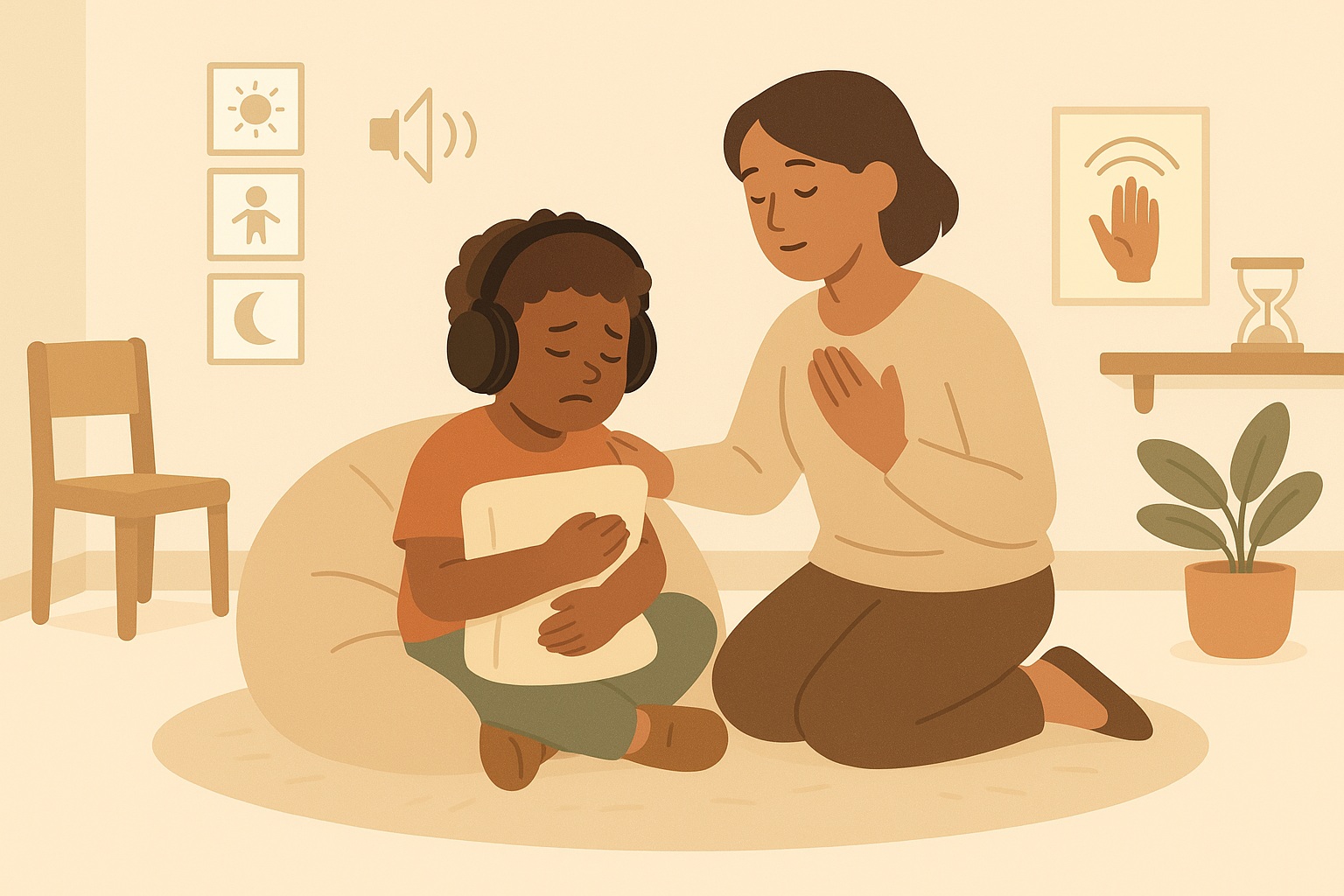
- Scan for overload signs: hands over ears, fleeing, shutdown, repetitive speech, stimming, or fixed gaze—more consistent with meltdown.
- Age/course: Frequent, intense outbursts beyond the preschool years should prompt a check for learning differences, ADHD, anxiety, or autism—and a tailored plan.
Responding to a meltdown (support-first)
- Safety & space: Remove hazards; give room; keep language minimal and calm.
- Reduce sensory load: Dim lights, lower noise, simplify demands; offer headphones, sunglasses, or a quiet corner.
- Co-regulate: Model slow breathing; offer preferred calming tools if accepted (pressure item, fidget).
- Aftercare: Once regulated, debrief briefly, identify triggers, and plan accommodations (visual schedules, transition warnings, quieter routes).
Responding to a tantrum (teach & don’t reinforce)
- Hold the limit calmly: No bargaining in the moment; avoid giving the payoff for yelling/screaming.
- Low attention to the outburst; high attention to recovery: Praise specific positives the moment regulation returns; teach a replacement (asking, “first-then,” choices)
- Skill-building: Teach emotion words, problem-solving, and flexible thinking outside crisis moments.
Prevention & accommodations (neurodiversity-affirming)
- Know triggers & plan exits: crowds, loud assemblies, scratchy uniforms, sudden schedule changes. Use visual timetables and transition warnings.
- Sensory supports: noise-reducing headphones, chewable jewellery, seating away from speakers; agree on a quiet “reset” space.
- After-school “restraint collapse” buffer: expect decompression time before homework or activities. (Helpful concept for many kids, especially neurodivergent.)
- When to seek evaluation: frequent, severe, or escalating episodes; self-injury; or concerns about ADHD, anxiety, learning differences, or autism. The Child Mind Institute recommends assessing underlying issues rather than focusing only on behaviour.
Note: This guide is informational and not medical advice. For personalised strategies, consult your child’s clinician or therapist.
Trusted sources
- Child Mind Institute: How to Handle Tantrums and Meltdowns; Why Do Kids Have Tantrums and Meltdowns? (clear parent guidance, triggers, and responses).
- National Autistic Society: Meltdowns – a guide (what meltdowns are and why they’re not “bad behaviour”).
- Autism Speaks: blog explainer on meltdowns vs tantrums (involuntary, overwhelm-driven).
It takes a village to raise a child !
Join our Facebook group Preschools & Kindergartens in Hong Kong to interact with other parents.

Some parents in Singapore feedback that they have to rush to fetch their children otherwise they will get fined for being late to fetch their children from child care centre

Outbreak of influenza in Preschools in Hong Kong, symptoms of influenza, details of influenza vaccination in Singapore, how to prevent influenza