Stomach Bugs in Preschool: Rehydration and Cleaning Protocols for Homes
TL;DR: Most preschool “stomach bugs” are viral gastroenteritis (often norovirus). Keep kids home, focus on oral rehydration (ORS) in small, frequent sips, and bleach-based disinfection after any vomit/diarrhoea. Soap-and-water handwashing beats hand sanitiser for norovirus. Many centres ask families to keep children home until at least 24–48 hours after the last symptoms; check your preschool’s policy.
1) What you’re dealing with
In preschoolers, “stomach flu” is usually viral gastroenteritis (e.g., norovirus). Symptoms: sudden vomiting, watery diarrhoea, cramps, low-grade fever. Most cases improve with home care (fluids, rest) but dehydration is the key risk.
2) Rehydration plan (easy & accurate)
Give ORS early, in tiny amounts
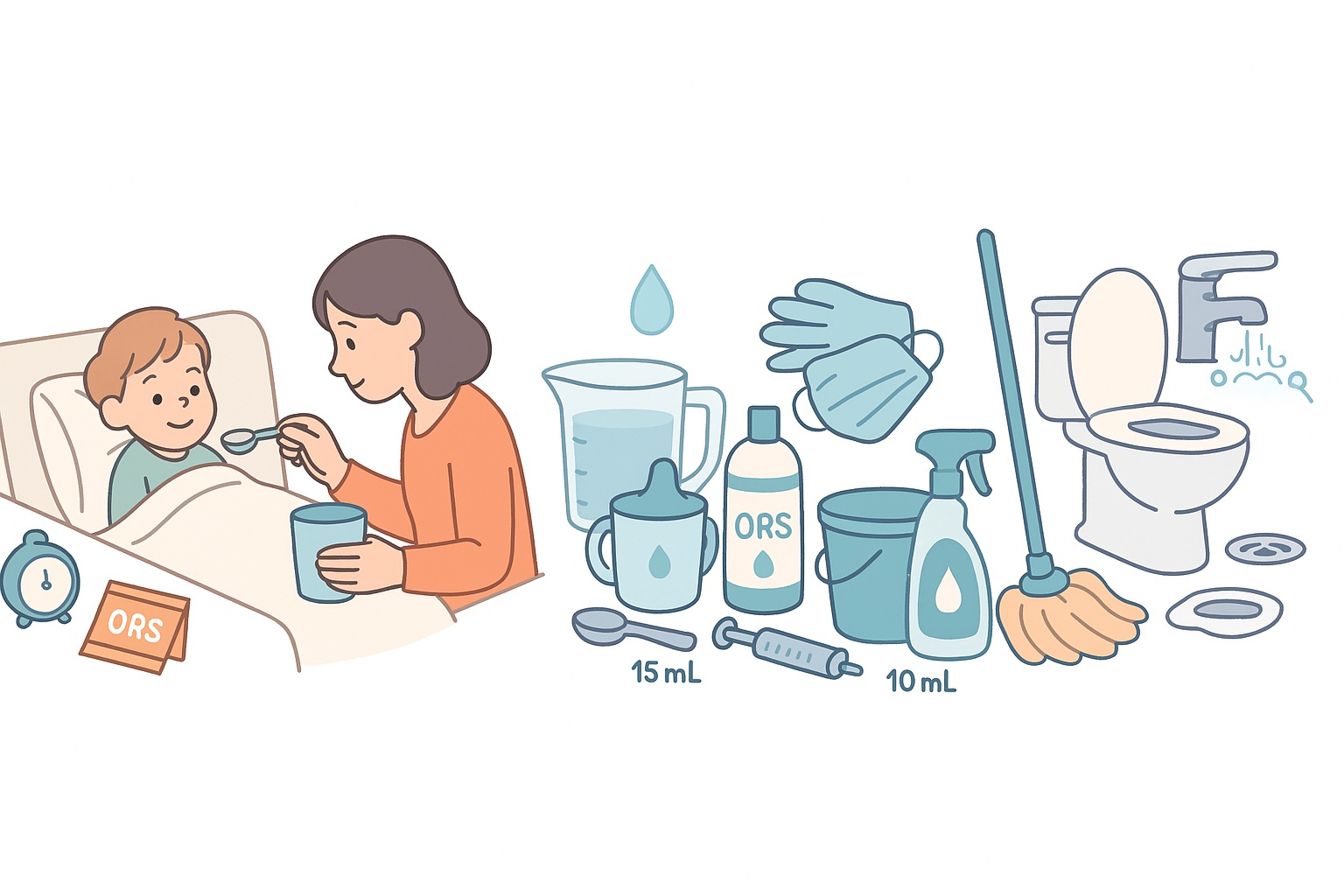
- Start with 5–10 mL (1–2 tsp) every 5–10 minutes; if vomiting happens, pause 10 minutes and resume. Continue breastfeeding.
- Plan A (no signs of dehydration): Offer extra ORS after each loose stool: <2 years: 50–100 mL; 2–10 years: 100–200 mL; >10 years: 200–400 mL.
- Plan B (some dehydration): Give about 75 mL/kg over 4 hours (e.g., 15 kg child about 1,125 mL over 4h), reassess, then continue with Plan A.
- Another paediatric summary: 50–100 mL/kg over 2–4 h works well too; replace ongoing losses.
Feeding
Resume regular age-appropriate foods within 24–48 hours as tolerated; avoid very sugary drinks for little kids.
Medicines?
Avoid anti-diarrhoeal drugs (e.g., loperamide) in young children unless a doctor advises—benefit is limited and risks exist.
Red flags—seek medical care
- Signs of dehydration (no urine >8h, very dry mouth, lethargy), persistent high fever, blood/green (bilious) vomit, severe abdominal pain, or symptoms not improving.
3) When can my child go back to preschool?
Preschools in Singapore do not admit unwell children and they may return only when fully recovered; many policies align with staying home for 24–48 hours after last vomiting/diarrhoea, and no food-handling for 2 days after recovery. Always follow your centre’s policy.
4) Cleaning & disinfection: two quick protocols
A) Routine daily clean (no obvious spills)
- Ventilate the home; put on disposable gloves (and a mask if handling soiled items).
- Wipe high-touch surfaces (switches, handles, remotes, tables) with an appropriate disinfectant; leave for the product’s contact time before drying.
- Toilets: clean from high to low and use bleach disinfectant on bowl, seat, flush button; close lid before flushing.
B) After any vomit/diarrhoea incident (targeting norovirus)
- Keep others (and pets) out. Put on gloves and a mask. Gently cover the area with paper towels to limit splashing/aerosols.
- Remove solids with disposable towels; dispose in a lined bag. Clean first with detergent & water.
- Disinfect hard surfaces: Use a bleach solution of 1,000–5,000 ppm (about0.1–0.5% sodium hypochlorite). Leave wet for at least 5 minutes (10 minutes for toilet surfaces). Rinse food-contact areas after.
- Bathroom traps & bowl: NEA recommends 0.5% bleach—about a 1:9 dilution of 5–6% household bleach—for U-traps, floor traps and toilet bowl (leave 10 minutes).
- Soft surfaces: Pick up residue carefully; steam-clean carpets/upholstery (about158°F/70°C for 5 minutes or 212°F/100°C for 1 minute) or launder if removable. Avoid vacuuming until cleaned.
- Laundry: Handle soiled linens gently (do not shake). Wash with hot water on the longest cycle and machine-dry hot.
- Hand hygiene: Wash with soap and water for 20 seconds; note that alcohol sanitisers don’t work well against norovirus.
0.1% (about1,000 ppm): 20 mL bleach + 980 mL water (makes about1 L).
0.5% (about5,000 ppm): 100 mL bleach + 900 mL water (makes about1 L).
Always check your bottle’s % active chlorine and follow label safety. CDC guidance for norovirus allows 1,000–5,000 ppm with more than or equal to 5 minutes contact time.
5) Kitchen & toilets: extra precautions
- No food prep by anyone sick and for 2 days after symptoms stop.
- Dishware/utensils: run a hot, soapy dishwasher cycle or hand-wash with hot water and detergent.
- Toilet routine after each episode: close lid before flushing; disinfect seat, lid, flush button, taps, sink surfaces; treat U-trap/floor trap with 0.5% bleach as above.
6) FAQ
Q1. Hand sanitiser is enough, right?
Not for norovirus. Use soap and water—sanitiser alone is less effective.
Q2. Can I just give water or sports drinks?
For kids, use ORS (correct salts & glucose). Plain water and sugary drinks alone don’t replace electrolytes properly.
Q3. When do we see a doctor?
If there are dehydration signs, persistent high fever, blood/bilious vomit, severe pain, or if the child is not improving. Infants <3 months: seek prompt care.
Q4. How long to keep siblings home?
Policies vary; many public-health advisories use the 24–48 hours symptom-free rule and rigorous handwashing/cleaning. Check with your preschool/ECDA.
Printable mini-protocol (stick on your fridge)
- Isolate & hydrate: Tiny, frequent ORS sips; track urine and energy.
- Clean then Disinfect: Detergent first, then bleach (0.1–0.5% for 5–10 min).
- Hot wash: Linens/clothes hot cycle; machine-dry hot.
- Hands: Soap & water 20s, often. Sanitiser is a backup only.
- Back to school: When fully recovered and generally 24–48 h after last symptoms (confirm centre policy).
Key sources: HealthHub (NUH) guidance for children; WHO/paediatric ORS dosing; NEA cleaning & bleach specifics for Singapore homes; CDC norovirus (handwashing, bleach ppm, 48-hour return guidance); MSF/WHO dosing tables; MOH/SFA food-handling advice.
It takes a village to raise a child !
Join our Facebook group Preschools & Kindergartens in Hong Kong to interact with other parents.