How to Manage Fever in Babies Under 2
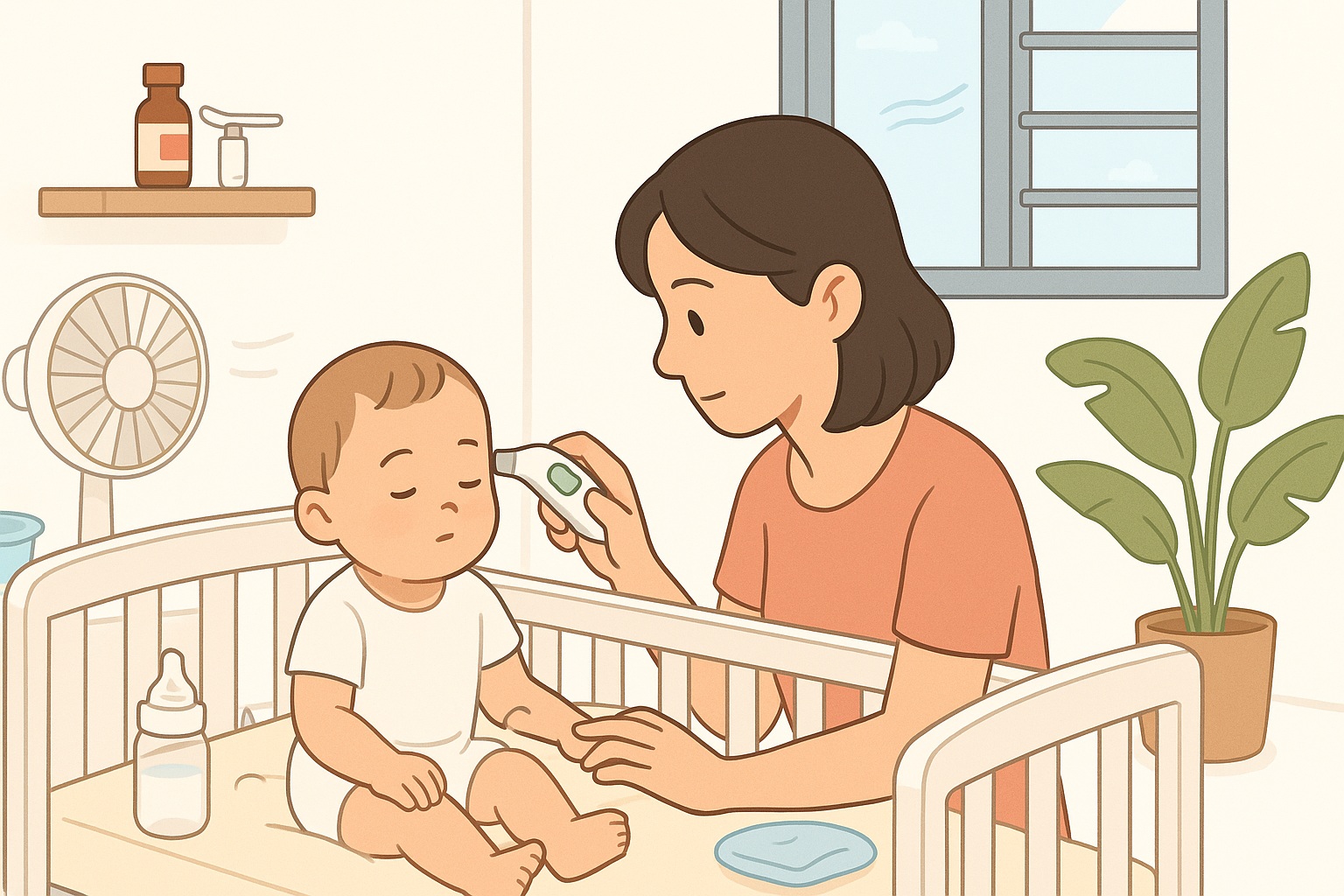
Quick definition: For babies, a true fever is usually a rectal/ear/forehead reading of more than or equal to 38.0 °C, or an armpit reading of more than or equal to 37.3 °C. Use a digital thermometer; ear thermometers are best from about 6 months onward. When in doubt, confirm with a rectal reading.
- Your baby is under 3 months old and has more than or equal to 38.0 °C.
- Any age with fever plus: difficult to wake, poor feeding, persistent vomiting, trouble breathing, signs of dehydration (no urine > 8 hours, very dry mouth/no tears), a seizure, purple/non-blanching rash, or looks seriously unwell.
Step 1 — Take the temperature correctly
- Under 4 weeks: use an armpit thermometer for screening. If febrile, confirm with a rectal reading if trained, or see a doctor.
- 4 weeks to <6 months: armpit or rectal. Ear thermometers are less reliable before 6 months.
- fever more than or equal to 6 months: ear (tympanic), forehead (temporal) or rectal. If readings seem off, confirm with rectal.
Step 2 — Keep baby comfortable at home
- Fluids: offer frequent breastfeeds/formula; a little water only if already on solids (ask your PD).
- Cool environment & light clothing: keep room well-ventilated; avoid over-wrapping.
- Rest: naps are fine; you do not need to wake baby just to check the number if otherwise well.
- Sponging? Not routinely needed. If you choose to sponge, use lukewarm water briefly and stop if baby shivers. Never use cold water or ice.
- Never use rubbing alcohol on skin to reduce fever.
Step 3 — Medicines (when baby seems uncomfortable)
Fever medicines don’t treat the cause; they help comfort. Dose by weight, not age. Check product strength before dosing.
Paracetamol (acetaminophen)
- Usual dose: 10–15 mg/kg per dose, every 4–6 hours as needed.
- Age: commonly used > 3 months (speak to a doctor for younger infants).
- Example: a 9.0 kg baby: 9.0 × 15 = 135 mg per dose. Match to your syrup strength (e.g., 250 mg/5 mL).
- Daily limit: follow label/doctor advice; do not exceed recommended total daily dose.
Ibuprofen
- Usual dose: 5–10 mg/kg per dose, every 6–8 hours as needed.
- Age: for babies more than or equal to 6 months. Avoid if dehydrated, vomiting, or if dengue/chickenpox is suspected.
Important: Avoid aspirin in children because of the risk of Reye syndrome. Do not routinely alternate paracetamol and ibuprofen unless your doctor specifically advises a schedule; it adds complexity and dosing errors.
When to see a doctor (non-emergency)
| Age | See a doctor promptly if… |
|---|---|
| < 3 months | Any fever more than or equal to 38.0 °C (same day, urgent evaluation). |
| 3–6 months | Fever fever more than or equal to 38.9 °C, or baby is unusually sleepy, irritable, feeding poorly, or fever lasts > 48–72 hours. |
| 6–24 months | Fever > 3 days, very high (> 40 °C), recurring fevers, or any red-flags (breathing difficulty, dehydration, seizure, non-blanching rash, persistent vomiting, severe pain). |
Febrile seizures (what to know)
- They can happen with rapid temperature rises in 6–60-month-olds. They are usually brief and not harmful.
- If a seizure occurs: lay baby on their side on a soft surface, don’t put anything in the mouth, and seek medical care. Antipyretics make babies more comfortable but don’t prevent febrile seizures.
Common myths
- “All fevers must be treated.” Not always. Treat discomfort, not the number.
- “Teething causes high fever.” Teething may raise temperature slightly but does not cause true fever (more than or equal to 38.0 °C). Look for another cause.
- “Sponging with cold water/alcohol helps.” Cold water can cause shivering; alcohol is dangerous. Stick to comfort measures and medicines as needed.
FAQ
Should I wake my baby to give fever medicine?
Generally, no. Prioritise rest and hydration. Give medicine if baby wakes and is uncomfortable, or as advised by your doctor.
Which thermometer should I buy?
A reliable digital stick thermometer works for armpit/rectal readings; add a tympanic (ear) or temporal (forehead) device once your baby is ≥ 6 months.
Could it be dengue?
If there’s high fever with severe aches, poor appetite, or you’re worried about mosquito exposure, see a doctor. Use paracetamol; avoid ibuprofen until dengue is ruled out.
This article is general information and does not replace medical advice. If you’re worried, see your GP/PD or go to a Children’s Emergency.
It takes a village to raise a child !
Join our Facebook group Preschools & Kindergartens in Hong Kong to interact with other parents.