How to Keep Toys Organised and Clean
How to Keep Toys Organised and Clean: A Practical, Evidence-Based Guide for Parents
Simple systems for storage and rotation, plus safe cleaning routines to reduce germs and support calmer, independent play.
Toys fuel learning, creativity, and emotional growth—but without simple systems they can invite clutter and germs. Research from paediatric bodies shows that routine cleaning reduces the spread of infections, while well-organised spaces improve children’s focus and calm. This guide combines evidence-based hygiene practices with practical organisation strategies you can start today.
Why Toy Hygiene Matters
- Hand-to-mouth exploration: Babies and toddlers mouth toys, which can spread RSV, influenza, and HFMD.
- Shared play: Toys pass through many little hands at playdates and centres—regular cleaning lowers transmission risk.
- Allergen control: Dust and dander collect on soft toys and can trigger allergies or eczema.
How Often Should Toys Be Cleaned?
| Toy Type | Cleaning Frequency | Recommended Method |
|---|---|---|
| Plastic toys (no batteries) | Weekly or after illness | Warm soapy water; dishwasher top rack if safe |
| Electronic toys | Monthly | Wipe with alcohol-based disinfectant; avoid soaking |
| Stuffed animals | Every 2–3 weeks | Machine wash gentle cycle or steam clean; dry thoroughly |
| Bath toys | Weekly | Rinse, disinfect periodically, and air-dry fully; discard if moldy |
| Teething toys | Daily | Mild soap and warm water after each use; rinse well |
Safe Cleaning Methods & Materials
- Soap & water: Gold-standard for most toys; rinse and dry fully.
- Vinegar (1:1 with water): Natural deodoriser for non-electronic toys; rinse afterward.
- 70% alcohol wipes/spray: Quick disinfection for hard, non-porous surfaces.
- Machine wash / sunlight: Wash soft toys in a bag; sun helps reduce dust mites and odours.
- Drying matters: Moisture invites mold—air-dry completely before storing.
- After illness: Clean high-touch toys daily and launder soft items before reuse.
How to Keep Toys Organised
1) Sort by Play Type or Zone
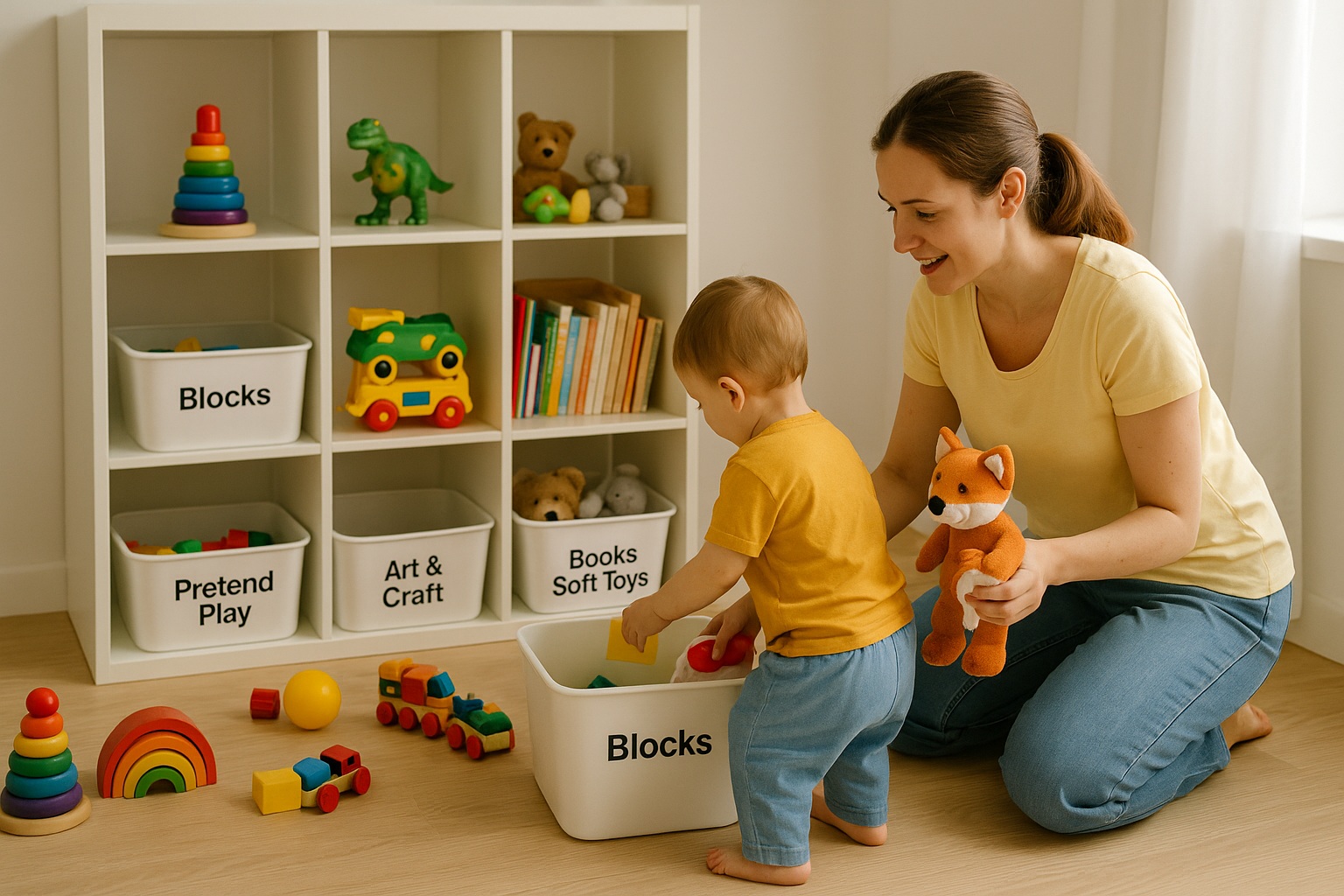
Use labelled bins for “Blocks,” “Pretend Play,” “Art & Craft,” and “Books & Soft Toys.” A clear “home” helps children return items independently.
2) Use Clear Containers
Transparent bins reduce dumping—kids can see what’s inside.
3) Rotate Toys
Every 2–3 weeks, store a portion away and reintroduce later. Rotation improves focus and reduces clutter and overstimulation.
4) Label with Words or Pictures
Photo labels are perfect for toddlers and support early literacy.
Involve Your Child
- Make a daily micro-routine: a 3–5 minute tidy before snack or dinner.
- Offer small jobs: wiping blocks, matching lids, sorting colours.
- Praise effort: “You put the cars in the garage bin—great teamwork!”
When to Replace Toys
- Cracked or broken pieces; sharp edges
- Moldy bath toys or items that don’t dry properly
- Torn plush with exposed stuffing or loose parts
- Frequently used during a contagious illness (consider replacing soft toys)
Scientific & Professional Sources
- Centers for Disease Control and Prevention (CDC). Cleaning and Disinfecting in Homes with Children (latest guidance).
- American Academy of Pediatrics (AAP). HealthyChildCare™ recommendations on toy cleaning, media, and healthy routines.
- National Association for the Education of Young Children (NAEYC). Creating safe, organised play environments.
- Journal of Infection Prevention (2020). Impact of toy hygiene practices on childhood infection rates.
FAQ
Can I use disinfectant wipes for all toys?
Use only on hard, non-porous surfaces. Avoid on teething toys and soft items; rinse toys that contact mouths.
Is vinegar safe for baby toys?
Yes for non-electronic toys. Wipe with a 1:1 vinegar solution, then rinse and air-dry before use.
How do I prevent mold in bath toys?
Choose toys without holes; squeeze out water and air-dry upside down after each bath; disinfect weekly; discard at first sign of mold.
My child resists cleaning up—what works?
Keep it short and predictable. Use songs, 3-minute “tidy races,” picture labels, and specific praise for effort.
It takes a village to raise a child !
Join our Facebook group Preschools & Kindergartens in Hong Kong to interact with other parents.