First Day in a Childcare Centre in Singapore: What to Prepare
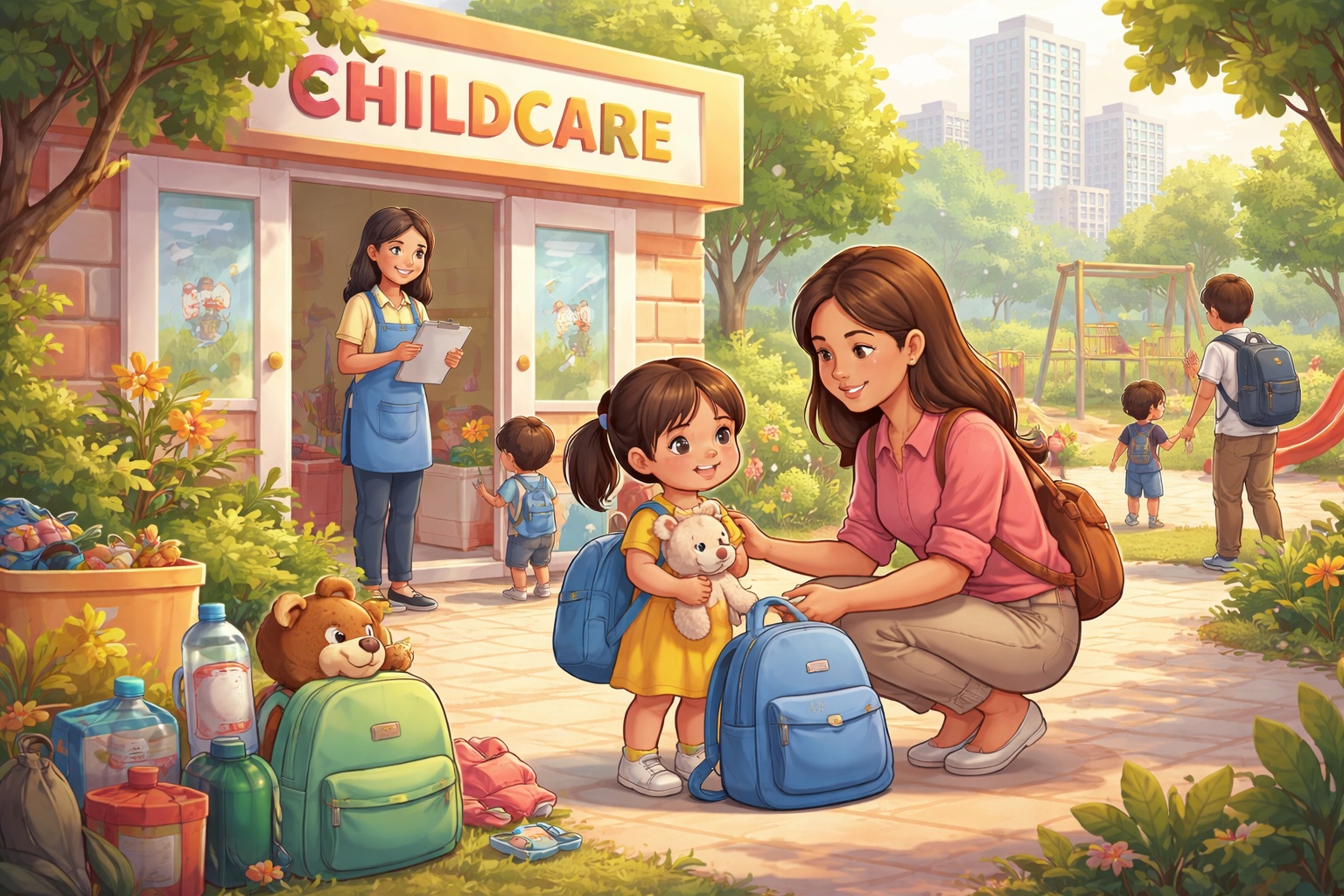
First Day in a Childcare Centre in Singapore: What to Prepare (Parent Checklist)
The first day of childcare can feel like a big milestone—for your child and for you. A little planning goes a long way: it helps your child settle faster, and it makes handover smoother for teachers. Use this Singapore-focused guide to prep your documents, routines, and “first-day bag” with confidence.
1) One Week Before: Confirm Centre Details
- Start time & arrival window: Ask if the centre prefers a shorter first day (common for infants/toddlers).
- Drop-off & pick-up process: Where to enter, which classroom, and whether you need a QR check-in / app check-in.
- What the centre provides: Some centres provide diapers, wipes, milk warming, bedding, or uniforms—others don’t.
- Health rules: Understand when your child must stay home (fever, vomiting, HFMD symptoms, etc.).
- Communication channel: Find out whether updates come via app, WhatsApp broadcast, email, or a daily logbook.
Tip: If your child has never been away from you for long, a brief “orientation visit” (even 15–30 minutes) can help them recognise the classroom and teachers.
2) Documents to Prepare (Singapore-Friendly List)
Centres may request different items, but these are commonly needed:
- Child’s identification details: Birth certificate details, NRIC/FIN (if applicable), and address.
- Immunisation records: Bring your child’s immunisation record (digital or printed), especially for infants.
- Emergency contacts: At least two contacts, plus any caregiver details.
- Authorised pick-up list: Names, relationship, contact numbers, and any ID verification steps.
- Medical info: Allergies, eczema/asthma triggers, medication instructions (if the centre allows), and doctor notes if required.
- Subsidy/admin forms: If you’re applying for subsidies, keep your supporting documents ready (the centre will advise what’s needed).
3) The First-Day Bag: What to Pack
For Infants (Infant Care)
- Diapers: Pack enough for the day + 2 extras.
- Wipes & diaper cream: If the centre doesn’t supply.
- Milk feeds: Formula (labelled) or expressed breastmilk with clear instructions (amount, timing, warming preference).
- Bottles & teats: Label each piece; pack an extra set if possible.
- 2–3 sets of spare clothes: Onesies, pants, bibs.
- Comfort item: Small lovey, pacifier (if used), sleep sack (if allowed).
- Swaddle/sleep item: Only if the centre requests/permits it.
For Toddlers & Preschoolers (Child Care / Kindergarten Levels)
- Water bottle: Leak-proof and easy to open.
- Spare clothes: 1–2 sets (more if potty training).
- Jacket/light cardigan: Some classrooms are air-conditioned.
- Indoor shoes/sandals: If required; choose simple Velcro.
- Toileting needs: Training pants/underwear, wet bag, extra wipes.
- Small comfort item: If permitted (keep it simple and replaceable).
Label Everything (Yes, Everything)
In a busy class, items look identical. Label your child’s name on: bottles, lids, teats, pacifiers, bags, towels, clothes, jackets, shoes, and lunch containers. Use waterproof labels or a permanent marker for fabric tags.
4) What to Wear on Day 1
- Easy-on, easy-off clothes: Great for diaper changes and toilet trips.
- Comfortable shoes: Velcro beats laces (especially for toddlers).
- Avoid complicated accessories: Long necklaces, sharp hair clips, or anything easily lost.
- Bring a rain plan: A small umbrella or raincoat if you walk/commute.
5) The Night Before: Set Everyone Up for a Smooth Morning
- Pack the bag and place it at the door (including a spare set for yourself if your baby is in a “spit-up season”).
- Prepare bottles/milk containers and label clearly (name, date, time, amount).
- Plan breakfast—keep it simple to reduce rush and stress.
- Sleep earlier if possible (even 30 minutes helps).
- Talk about tomorrow in a calm, positive way: “You’ll play, eat, and your teacher will take care of you.”
6) Drop-Off: How to Make Goodbye Easier
Many children cry at drop-off—this is normal and not a sign you’re doing it wrong.
- Keep goodbye short and predictable: a hug, a phrase (“I’ll be back after your nap”), then handover.
- Don’t sneak away: It can increase anxiety later. A clear goodbye builds trust.
- Pass key info to the teacher quickly: sleep quality, last feed, mood, any medication notes (if applicable).
- Stay calm: Kids read your expression. Gentle confidence helps them regulate.
7) How to Deal With Separation Anxiety (Practical Steps That Work)
Separation anxiety is common—especially for infants and toddlers, and especially during the first few weeks. The goal isn’t “no tears.” The goal is helping your child feel safe, and helping teachers build trust quickly.
Before Day 1 (Prep at Home)
- Practise short separations: Start with 5–10 minutes (with a familiar caregiver), then gradually increase. Tell your child you’re leaving and coming back—then always come back.
- Use a predictable phrase: Example: “Mummy/Daddy is going to work. I will come back after your nap.” Use the same sentence daily so your child learns the pattern.
- Role-play “school”: Pack a mini bag, wave goodbye, and “check in” at a pretend door. Keep it light and playful.
- Read books about going to school: Simple stories help children understand what to expect.
During Drop-Off (What to Do in the Moment)
- Do a calm, confident handover: Smile, make eye contact, and pass your child to the teacher (rather than letting them cling for long).
- Keep it short: Long goodbyes often make tears bigger. A short goodbye teaches “separation is safe.”
- Validate, then reassure: “I know you feel sad. Teacher is here. I’ll come back after your nap.”
- Avoid bribes or big promises: “If you don’t cry, I buy you…” can increase pressure and anxiety.
- Don’t sneak out: It may reduce crying in the moment, but it can reduce trust over time.
After Drop-Off (Helping Your Child Settle Over Weeks)
- Stick to routine: Consistent drop-off time, consistent goodbye phrase, consistent pick-up time where possible.
- Use a comfort item if allowed: A small lovey or family photo card can help (choose something washable and replaceable).
- Ask teachers for a “settling plan”: Some children do better with a shorter first day, then gradual increase.
- Expect extra clinginess at home: Your child may need more cuddles in the evening. This is a normal “reconnection” phase.
- Watch progress, not perfection: Look for small wins: crying stops faster, they engage in play sooner, they accept comfort from teachers.
When to Speak to the Centre (or Your Child’s Doctor)
- If crying lasts for long periods daily with no improvement after several weeks.
- If your child refuses all food/water at school consistently.
- If sleep becomes very disrupted for an extended period.
- If you suspect sensory/anxiety needs that require a more customised transition plan.
Parent reminder: your calm confidence is powerful. Even if you feel worried inside, a steady goodbye helps your child learn: “I can do hard things, and my parent always comes back.”
8) What Teachers Appreciate Hearing on Day 1
A quick “cheat sheet” helps teachers support your child faster:
- Sleep routine: nap timing, comfort methods (patting, white noise, pacifier).
- Food preferences: textures your child accepts, allergies, any feeding challenges.
- Separation triggers: what usually calms them (a song, a toy, a phrase).
- Language: words they use for toilet, water, milk, pain, etc. (bilingual notes are helpful).
- Health notes: eczema care, inhaler plan, recurring issues (if relevant).
9) A Simple First-Day Checklist (Copy/Paste)
| Category | Checklist |
|---|---|
| Documents | Emergency contacts, authorised pick-up list, immunisation record, allergy/medical notes, centre forms |
| Bag Items | Water bottle, spare clothes, diapers/toileting items, comfort item (if allowed), jacket/cardigan |
| Feeding | Milk/formula & bottles (labelled), feeding instructions, bibs (if required) |
| Labelling | Labels on bottles, clothes, shoes, bags, towels, containers |
| Morning Plan | Leave earlier, simple breakfast, short goodbye routine, quick handover notes to teacher |
10) After Pick-Up: What to Expect
- Big emotions: Some children “hold it together” in school, then melt down at home.
- Extra tiredness: New routines are exhausting—earlier bedtime helps.
- Appetite changes: It can take a few days for eating to normalise.
- Adjustment period: Many children settle over 2–4 weeks, sometimes longer for younger ones.
Keep evenings low-stimulation: simple dinner, bath, cuddles, and an early night. If you’re worried, speak to the teachers—they see patterns and can suggest small tweaks.
FAQ: First Day of Childcare in Singapore
How long should my child stay on the first day?
It depends on the centre and your child’s age. Some centres suggest a shorter first day (especially for infants), then gradually extend time over the first week.
What if my child cries at drop-off?
Crying is common. Keep goodbye consistent and brief. Most children calm down once they start an activity with teachers and peers. If you’re concerned, ask teachers how long it took your child to settle and what comfort worked.
How do I handle separation anxiety?
Use a predictable goodbye phrase, keep drop-off short, don’t sneak away, and keep routines consistent. Expect clinginess at home and focus on progress over time rather than “no tears.”
Should I bring my child’s favourite toy?
A small comfort item can help, but check the centre’s policy. Choose something easy to wash and not too precious.
What’s the most important thing to label?
Bottles (including lids/teats), water bottles, jackets, shoes, and spare clothes. Unlabeled items are the #1 cause of “lost-and-found” piles.
It takes a village to raise a child !
Join our Facebook group Preschools & Kindergartens in Hong Kong to interact with other parents.