Atypical Sensory Processing (Sensation Seeking) & Screen Time in Children: What Parents Can Do (Evidence Based)
Screen Time & Child Development (Singapore)
Atypical Sensory Processing (Sensation Seeking) & Screen Time in Children: What Parents Can Do (Evidence-Based)
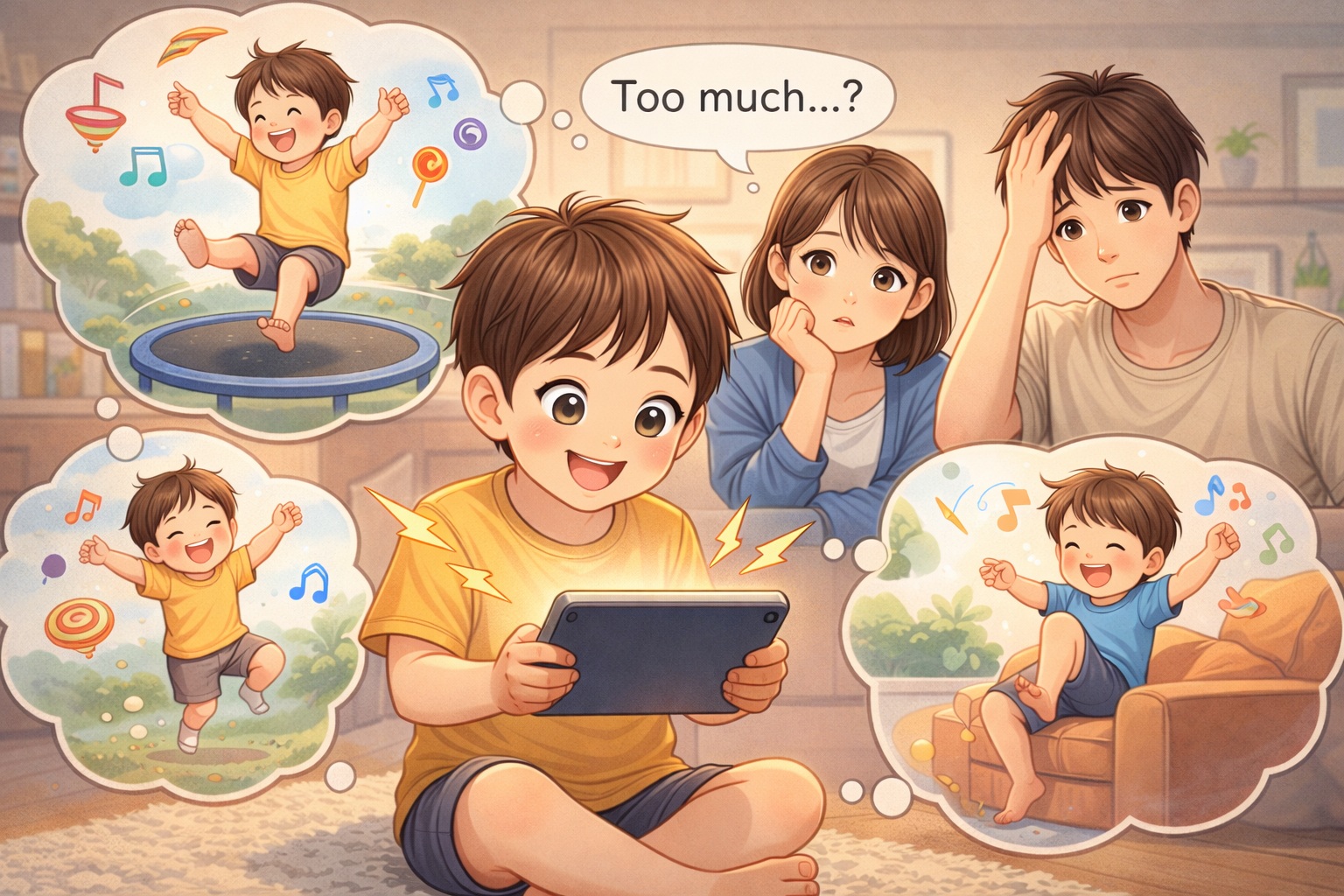
Quick idea: Some children seem “wired for more.” They move constantly, seek intense play, touch everything, chew, crash, or chase novelty. In sensory terms, this can fit a sensation seeking pattern—one of the four patterns in Dunn’s sensory processing framework (high thresholds + active response). In simple words: the brain needs more input to feel “just right.” (Dunn model description: sensation seeking = high thresholds + active responding.)
Why this matters for screens: Screens can deliver a huge dose of stimulation (fast visuals, sound, novelty, rewards). For a sensory seeker, that can feel regulating in the moment—yet it may also make offline transitions, attention, and sleep harder if screen habits aren’t managed well.
What “sensation seeking” means (without jargon)
Dunn’s model describes sensory patterns based on (1) how easily someone notices sensory input (their threshold) and (2) whether they respond actively (they do something to change the input) or passively. A peer-reviewed paper describing Dunn’s model notes that sensory seeking is characterized by high thresholds and active strategies. In practice, sensory seekers often pursue extra movement, touch, or novelty.
Common “sensation seeking” behaviours
- Constant movement: jumping, spinning, climbing, crashing
- Touching everything; messy play; strong preferences for textures
- Chewing (shirts, pencils), seeking strong tastes
- Volume up, bright visuals, novelty-seeking
- Looks “bored” easily and wants faster stimulation
What it is NOT
- Not automatically “bad behaviour” or poor parenting
- Not the same as ADHD (though they can overlap)
- Not proof a child needs “more screen time”
What research says about screen exposure and atypical sensory processing
A large study published in JAMA Pediatrics found that higher early-life digital media exposure was associated with higher odds of later atypical sensory processing patterns in toddlerhood. Notably, at 24 months, greater screen exposure was associated with increased odds of later high sensation seeking (among other sensory patterns).
Important caution: An association does not prove cause-and-effect for any single child. Many factors influence both screen use and child behaviour (family stress, sleep, temperament, childcare routines). But the evidence does support this practical takeaway: use healthy screen habits early and don’t let screens replace sensory-rich, real-world play.
In older children too, studies have examined links between screen exposure and sensory processing measures. For example, a 2024 study in typically developing children (6–10 years) reported associations between increased screen exposure and sensory processing outcomes.
Why screens can “hook” sensory seekers
1) Screens deliver high-intensity input fast
Bright colours, quick scene cuts, sound effects, novelty and rewards can provide a strong “dose” of stimulation. For a child with high thresholds, this can feel immediately satisfying.
2) Screens can become a “sensory shortcut”
Instead of getting input through movement, play, or social interaction, the child learns: “When I feel restless/bored, the device fixes it.” Over time, this can make non-screen activities feel “too slow.”
3) Transition difficulty
The bigger the stimulation gap between screen time and real life, the harder it can be to switch off without frustration.
4) Sleep and arousal
High-arousal content and late screen use can interfere with winding down. Singapore’s guidance encourages avoiding screens during meals and at least one hour before bedtime.
What parents can do (evidence-informed, practical)
Step 1: Keep screen rules predictable (reduce fights)
- When: fixed windows (e.g., after homework, not first thing in the morning).
- Where: common areas; avoid bedroom screens when possible.
- How long: timer + “two-minute warning.”
- What: choose calmer, slower, age-appropriate content over fast, highly stimulating videos.
Singapore MOH guidance encourages balanced screen habits (including avoiding screens during meals and one hour before bedtime, and co-viewing/discussing content for young children).
Step 2: Meet sensory needs offline first (so screens aren’t the only regulator)
Sensory seekers often do better when they get “big body input” daily. Think of it as filling the sensory tank with healthier sources:
Movement (“engine” input)
- Playground time, scooters, swimming
- Mini trampoline (safe supervision)
- “Animal walks” (bear crawl, crab walk)
Heavy work (calming for many kids)
- Carry groceries (light bags), push laundry basket
- Wall pushes, chair push-ups
- Help with mopping, wiping tables
Tactile + oral alternatives
- Playdough, kinetic sand, water play
- Crunchy snacks at appropriate times
- Chewelry (OT-advised) or safe chew options
“Sensory menu” idea
Create a short list of 6–8 activities your child can choose from before asking for screens. Example rule: “First 10 minutes of sensory menu, then screens if it’s screen time.”
Step 3: Change the type of screen time (not just the amount)
- Prefer: educational + slower-paced shows, story-based content, co-viewing with talk.
- Reduce: autoplay short videos, rapid-reward games, endless scroll feeds.
- Use co-viewing as “sensory coaching”: pause and label emotions/actions; mirror it offline.
For young children, Singapore guidance highlights co-viewing and discussing content, and limiting daily screen time so there’s enough time for sleep, play and interaction.
Step 4: Add “transition buffers” to prevent meltdowns
- Before off: 2-minute warning + “choose your last thing.”
- After off: immediate replacement activity that matches sensory needs (jumping jacks, snack + water, Lego, drawing).
- Phrase: “Screen is off. Body needs movement now.”
Step 5: Watch for “screens as emotional regulation” patterns
If screens are mainly used to stop distress (“digital pacifier”), conflicts often grow over time. A broad review of measures linked to negative outcomes highlights patterns like device use before sleep, solitary device use, and device use for emotional regulation as areas of concern.
Swap strategy: Comfort first -> regulation tool (breathing / movement / sensory menu) -> then screens only if it was planned screen time.
Singapore-friendly screen guidance reminders
- Under 18 months: avoid passive screen use (except interactive video chat).
- 18 months to 6 years: limit screen use (outside school) to under 1 hour/day, avoid using screens just to occupy/distract, avoid screens during meals and one hour before bedtime, and co-view age-appropriate educational content.
- School-age: develop a family screen plan and protect sleep and offline activities.
When to seek extra support
- Seeking behaviours create safety risks (climbing dangerously, bolting, constant crashing/injury).
- School functioning is impacted (cannot sit, cannot transition, frequent meltdowns).
- Severe screen conflict: tantrums that are intense/prolonged, daily power struggles, sleep disruption.
- You suspect broader neurodevelopmental concerns (attention, communication, repetitive behaviours).
Consider discussing with your child’s clinician and/or an occupational therapist experienced in sensory processing.
FAQ
Is sensation seeking “a disorder”?
Sensory seeking is a pattern in sensory processing frameworks. It can be a normal temperament style. It becomes a problem when it interferes with daily function, safety, learning, sleep, or family life.
My child is a sensory seeker—should I ban screens?
Most families do better with structured boundaries + better content + meeting sensory needs offline. A total ban may increase conflict and isn’t always necessary, but unmanaged high-stimulation content can make regulation harder.
Is there evidence that early screen time links to sensory differences later?
Yes—one major study found higher screen exposure in infancy/toddlerhood was associated with higher odds of later atypical sensory processing patterns including sensation seeking.
What’s one change that often helps quickly?
Replace high-stimulation short videos with slower-paced content, and add a daily “movement dose” before screen time. Many parents notice fewer meltdowns at switch-off when the child’s sensory “tank” is filled first.
It takes a village to raise a child !
Join our Facebook group Preschools & Kindergartens in Hong Kong to interact with other parents.